In a Minute There Is Time

One of the interesting things about having read so much literature is that snippets of poetry pop into my head at what seem like weird times. I’ll be sweating in my car and Coleridge’s “The Rime of the Ancient Mariner” trickles into mind:
Water, water, every where,
Nor any drop to drink.
Or maybe I’ll be in a public bathroom and get a whiff of that lovely orange-scented “fragrance” and lines from Stevens’s “Sunday Morning” waft by:
Complacencies of the peignoir, and late
Coffee and oranges in a sunny chair
For the past couple of weeks I’ve been haunted by Eliot’s “The Love Song of J. Alfred Prufrock,” one of my all time favorite poems:
In a minute there is time
For decisions and revisions which a minute will reverse.
These lines fall upon me at what seem like odd times. When I’m running. Biking. Staring at my training log tacked on the side of my fridge.
On Thursday morning I figured out what it is that’s been getting me, why Prufrock haunts me. I stood staring again at my log. Just over 4 weeks until the Olympic distance tri I was sure I would enter. Thursday. I was supposed to swim. Instead, I drew a line through the day. I looked over my plan. Three more swim days Xed out. Two strength-training days.
My upper body isn’t doing what it’s designed to do. It’s supposed to be strong. Lift things. Move other, heavier things. Like me. Through the water. Nearly 3 months since a shoulder injury caused me to stop doing “normal” activities, I am still unable to resume them fully. (I somehow suspect that when my doctor said go ahead and resume normal activities, his idea of “normal” was a bit different from mine.)
No Olympic distance tri for me, it seems. Not yet, anyway.
By Thursday afternoon I revised my goals. Lofty ones, maybe, but why not dream big? San Antonio RnR half marathon in November—to qualify for the Houston marathon in January. And, if I’m going to dream even bigger, why not see if in Houston I can qualify for Boston?
Who knows if I’ll qualify for anything, but it can’t hurt to aim high. If I can’t swim, I might as well run.
At least that’s my plan. For the minute.
Read Full Post | Make a Comment ( None so far )Making History at the Livestrong Austin Half Marathon

I made history on Sunday, February 17, 2013.
Well, maybe not earth-shattering, life-altering, textbook-worthy history, but my history. I PRed at the Livestrong Austin Half Marathon.
My goal: Under 2 hours. My official chip time: 1:56:21.
It was an awesome race, but a much harder course than I remember. Who put all those hills in the last 3 miles? Can we fire them?
I was–and remain–ecstatic, mentally if not physically. For 2+ days my body felt like it had been beaten with a stick. My legs hurt, from the bruised tip of my left middle toe all the way up to my lower back. I don’t recall ever feeling like this after a race.
Regardless, I wouldn’t trade Sunday for anything, not even a barrel of Cadbury eggs. Which I LOVE, and which my boyfriend gave me as a post-race gift. (Not a barrel full. Just one. Perfect.)

Every race is a learning experience. Here is what I learned from the Austin half:
1. I need more hill training.
2. A perfectly normal toe going into a half can look like a Concord grape coming out.
3. Running buddies save the world (or at least your run).
I will write more about running buddies in a future post, but let me just say here that Katie from Houston was a God-send. We ran the first half together to keep each other on pace. We didn’t talk much after mile 3, and we lost each other somewhere around mile 6, but sharing the beginning of a race with someone else makes or breaks it, in attitude and time.
4. Gatorade is not my friend.
I never drink Gatorade and stopped drinking any sports drink a few years ago. I prefer water, plain and simple. Most sports drinks contain too much sugar for me, particularly Gatorade, which has always made me nauseous.
Additionally, I learned recently that BVO, a synthetic chemical originally manufactured as a flame retardant, has been an ingredient in many sports drinks and sodas, including Gatorade, for years. All the more reason for me to avoid it.
However, somewhere around mile 5 I cruise into a water stop, grab what I think is a full cup of water, and down it. To my dismay, it’s Gatorade. Almost instantly, I am nauseous. And, since the BVO news broke, I am more than just a little upset.
For the next 8 miles I am having two simultaneous conversations with myself. One is a rational discussion laying out all the reasons why I cannot take the time to stop and vomit until after I cross the finish line. My stomach churns for the remainder of the race as small streams of lemon-lime shoot up the back of my throat.
I never do vomit, even though my stomach will not feel normal until sometime in the late afternoon.
The second conversation has to do with BVO. Last week I mentioned the importance of mental distractions in seeing me through long runs. Usually, the distraction is music–not a real iPod, but the iPod on continuous loop in my head. On a particularly good long run recently, Sugar Ray’s “I Just Want to Fly” helped me to. On a particularly hard long run, Train’s “Calling All Angels” got stuck in the loop.
Sometimes movie scenes replay in my head, a little bit reworked. Like during my 11 mile This Is Spinal Tap long run. I envisioned my interview with Rob Reiner, who ran along beside me as we discussed the fact that every other runner might stop at 10, but not me.
ROB: Why don’t you just make ten faster and make ten be the top number and make that a little faster?
ME: [pausing and looking down at my legs] These go to 11.
The BVO distraction, unfortunately, was not as fun. At least, I kept telling myself, if another meteor hits Earth and Austin explodes into a fireball, I’ll be safe. Me and half the runners. Austin may burn, but we’re flame retardant.
At least I got that goin’ for me, which is nice.
And I got my PR.
Read Full Post | Make a Comment ( 9 so far )The End in Sight

In a little more than 48 hours I will have PRed the Austin Half Marathon.
It will be cold Sunday morning, somewhere in the mid to upper 30s. When my alarm goes off I will already be awake, half dreading getting out from under the warm covers so blasted early.
I’ll sit on the living room floor like I always do, cup (or 2) of coffee in hand, and stretch, not necessarily because I need to stretch promptly upon awakening, but because it’s a nice excuse to sprawl out on the floor and half-doze instead of crawling back into bed.
My dogs will look outside at the still dark sky, and then at me like I am crazy, burrow into a cozy nest in the throw on the couch, and go back to sleep. Like they always do.
But this Sunday won’t be like any other running day. No stalling on this cold morning with endless coffee or straightening up. This day is going to rock.
I have visualized race morning for weeks–waking up and getting ready for the race, driving to Austin, walking to the start line, warming up. I know what I will eat and when, what my clothing options are for any kind of weather (this is Texas, after all–the thermometer can fluctuate 40+ degrees within hours). I have reminded myself to press my Garmin’s ON button as soon as I cross the Start line.
I have visualized what my negative split will feel like, particularly the second half, fast and hard to the Finish line.
Most important, I have repeated in my mind’s eye crossing that line. Finishing strong. My best run ever.
Strangely, perhaps, visualization comes so easily for me that it often resembles daydreaming. Especially on long runs. Maybe my mind needs a distraction in order to let my body alone to do what it will. Or maybe I am simply determined to get the result I want. Regardless, I have seen the end of this race, over and again, and I know it won’t be good. It will be fabulous.
I can’t wait.
Come to think of it, I haven’t. I’ve seen it.
Read Full Post | Make a Comment ( 2 so far )Getting Squirrelly
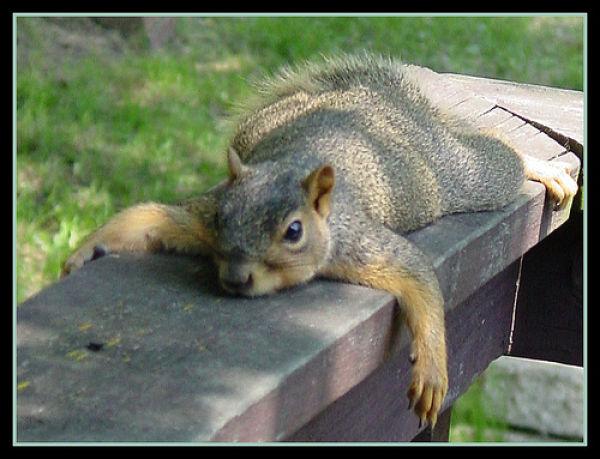
My dogs made a new friend this fall. A squirrel decided to vacation in the oak tree in my back yard. The tree’s branches stretch in a long line between my roof and the greenbelt behind my house, and the squirrel runs laps through my backyard on nice days.
It was the squirrel that befriended my dogs. Befriend, terrorize, whatever you want to call it, the outcome is the same. He sits in the branches and chatters loudly, calling my dogs out to play. Then he plops himself down on the roof overlooking my deck, back legs splayed out like a butterfly and front legs daintily crossed, and stares calmly down at my dogs as they bark wildly. They can do this for hours.
I’ve watched the squirrel get fatter, lazing about on the roof, as the weeks have progressed. It’s been a great year for acorns, and there’s loads of squirrel food on the ground. (I sometimes I have to remind my dogs that they’re not squirrels and shouldn’t eat acorns. You know how it is. Friends mimic friends. They see the squirrel root around in the yard and want to root around too.)
But I haven’t seen the squirrel around much since the time change. My dogs keep vigil on the deck, searching the branches and roof for signs of him, but he hasn’t called. My guess is he’s holed up with his acorns, getting ready to hibernate.
I know how he feels. Once the time change hits, I want to do the same thing.
Seems like every year between Daylight Savings Time and Groundhog Day, my motivation to get out of bed early and work out dries up like the leaves. I find myself sleeping in and foraging the pantry for all kinds of food I know I shouldn’t eat. For me, that’s a bad combination: zero exercise + loads of goodies = blah. I end up feeling terrible by Christmas.
This year, I made a conscious decision to not be like our new friend the squirrel. Instead, I decided to be proactive. The only way I can get motivated during the coldest, darkest days of the year is to make a plan:
- Make a date. I selected a race and a date: Austin Half Marathon, February 17. It was an easy race to pick—14 weeks out from the day of decision, and my friend is running it. As I recently discovered, running a race is so much more fun with a friend by your side.
- Pen it in. There are many great training plans to choose from. I follow Hal Higdon’s 12-week training plan. Seeing my entire plan laid out on paper with my times penciled in as the weeks progress really motivates me, so I keep a paper copy of my training rather than an electronic one.
- Post it up. I tack my training calendar on the fridge 2 weeks before my official training start date. I need time to see it, absorb it. Reassure myself that I can do this. I’ve done it before.
- Blab. The best way I know of to commit to a race is to tell everyone I know that I’m going to run it. To say it makes it so.
- Get moving. Although I’ve been “pretraining” for a long time, “real” training begins once I mark my times in pencil on my calendar on Day 1. This time around, I think the first week will be the hardest, partly because Week 1 begins the Monday after Thanksgiving and partly because the mornings are getting colder. On the bright side, maybe my start date will prompt me to not eat enough to feed a family of 4 on Thanksgiving.
- Register. I usually register for a race after I start training. This time, I will likely wait until I’m about half way through training. This race is a big one for me. I haven’t run a half marathon in over two years and, to be honest, I’m a bit afraid. I haven’t run more than 6 miles since I injured my hip two years ago.
Isn’t that the way? Fear is the biggest deterrent I know: Fear of injury, discomfort, cold. Failure. But not this time.
As much as I may be afraid that I can’t run a half marathon, my bigger fear is that I will become like the squirrel and find my way out of a hole sometime toward the end of winter, wondering where all my time—and training—went.
Read Full Post | Make a Comment ( 4 so far )The Wonder Wall: or, I wonder why I hit that wall
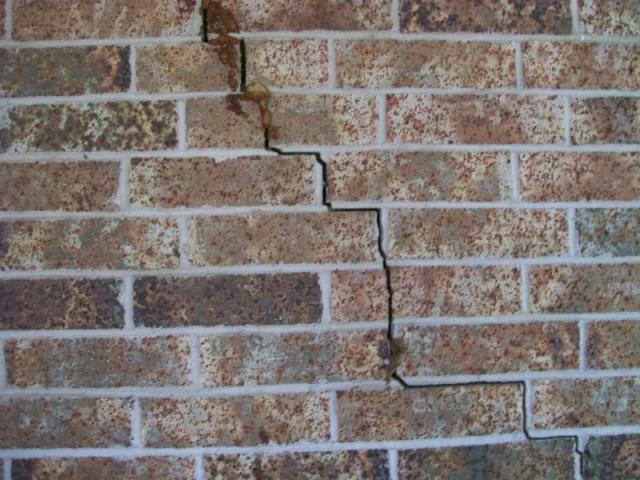
There you are one early morning, in the pool swimming laps, on your bike cruising down country roads, or out for a long run through the backstreets. You had a plan, you set your distance, knew your route and were off. But half way through your workout, your arms stopped rotating like a windmill, your legs resembled the rubber chicken sitting on the corner of your desk, and your body slumped into something you liken to the compost pile in your backyard.
It’s happened. You’ve hit the wall.
This can be dismaying, to say the least, especially when you thought you were doing fine and felt like you were in great shape to be out there rolling.
What causes us to hit the wall and what can we do to prevent hitting it? It seems to me there are three important factors athletes—yes, even amateur athletes like most of us—need to consider before we hit the dawn running.
Nutrition
If your body was like Janet Jackson, it might sing you a song: What have you done for me lately? (And if your mind is like mine, you get a song stuck in your head whose words you either don’t like or can’t remember, but you sing it to yourself anyway, making up different words to suit your situation. Like what did you eat for me lately?)
The question is a serious one. What did you fuel your body with before your workout? Before, in my mind, is not only the 30 to 60 minutes before you head out the door, but the long stretch of hours that lead into your workout, the night before if you work out in the morning or the entire day if you work out in the afternoon or evening.
I work out first thing in the morning. I always eat a small meal 30 minutes or so before my workout, but I am also cognizant of what I eat the night before. If I am doing cardio in the morning, I make sure I eat complex carbs with dinner. And if I’m hungry before I go to bed, I eat. Your body needs the right balance of proteins, fats, and carbs, complex as well as simple, to function at its best. Don’t deny it what it needs.
Hydration
If you feel thirsty, it’s already too late. You’re dehydrated. What do you do? Drink, drink, drink! Drink before you go to bed, drink before and after your workout. Drink always, all day long.
Notice I didn’t include the middle of your workout as a time to drink. That depends on what you’re doing and how long you’re doing it. I always have water with me when I bike, swim, and weight train. I drink frequently during all of these activities. But I don’t take water with me when I run unless I plan to be out there more than 60 minutes. I know there are some people who would say, so what? Take water anyway! For me this is simply a personal preference. I don’t like holding things in my hands or feeling extra weight hanging on my hips when I run.
What do you drink? Water. Lots of it. Sports drinks are unnecessary for most people, unless you’re out there sweating profusely for long periods of time. If you’re training for a marathon or a triathlon, especially in summer in Texas, that’s a different story. Kind of. I prefer coconut water over sports drinks because sports drinks have a lot of sugar in them. Coconut water has none. It’s a great way to keep hydrated or to rehydrate.
Muscle fatigue
It could be that you hit a wall because your body is just plain tired. Have you slept enough? Have you over trained? Does your body need rest for a few days? Should you stop what you’re doing at the moment, or should you push through?
That depends.
The way you get to know your own strength, to find out what you’re made of, and to improve your endurance is to push yourself beyond what you think are your limitations. Sure, I can stop when my knees get wobbly or turn into lead pipes. I may even have to stop. But at what point do I make this determination?
Ask Socrates. He’d probably say Know Thyself. Part of training hard and pushing yourself to be better, stronger, faster than you were before (like the Six Million Dollar Man) is knowing your body well enough to understand what it’s trying to tell you and to respect it enough to listen. There’s a fine line between breaking through the wall and breaking your body. The first is exhilarating. The second excruciating. Unfortunately, sometimes we learn to recognize our body’s queues through trial and error. When we err, it hurts.
Inevitably, at some point in training, you’ll hit a wall. If you pay attention to your body, it will let you know why you hit it and what to do about it. Listen to it. Your body knows best. Almost like your mother.
Read Full Post | Make a Comment ( 3 so far )Gratitude. It’s what’s for breakfast.
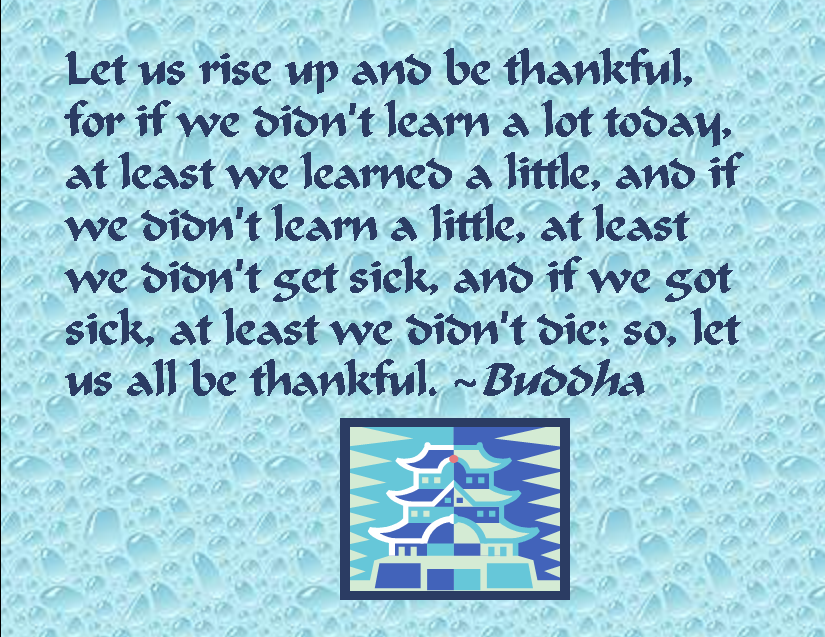
I don’t always jump out of bed with a happy smile on my face. Some mornings I don’t even want to roll out and frown. I have my share of days when I dread getting out of bed, and sometimes I even dread the thought of running.
But one of the things I love about running is the remarkable way it transforms my attitude, usually from cranky to grateful. Most morning runs are like that. My time outside results in more than the physical benefits I get from running. Running shows me gratitude.
By the end of my run, I usually have a mental picture of all the things I am grateful for. Some of them look like this:
G od. For making me. Able.
R obert, my boyfriend.
A ll my family and friends. Even the cranky ones.
T oday, because it’s all I have for certain.
I ce cream.
T omorrow, because with it comes promise and hope.
U rsa Minor. Or pretty much any constellation.
D ogs. Mine: Smaug and Queequeg.
E ars to hear. Eyes to see.
Does running do the same thing for you? What are you grateful for?
Read Full Post | Make a Comment ( 4 so far )What Would Barbie Do…in the Olympics?

from Economic Times, India Times
I love the Olympics. And although I root for the USA in every event they participate, I have to admit that what I watch for is not necessarily nationality, it’s ability. The athletes who make any Olympic team are extraordinary. Watching them gives me goosebumps at the least, and sometimes brings me to tears. The perfection and grace of movement in rowing, diving, sprinting, pole vaulting, gymnastics is simply stunning, particularly since the athletes make what they’re doing look so effortless. It’s easy to forget all the blood, sweat, and years, all the training and discipline and sacrifice that lead to this one event. It blows me away.
So when I heard comments about Gabby Douglas’s hair, I was, well, perplexed. Here is a woman who won the gold medal in the gymnastics all-around event and is a member of the U.S. team that won a gold medal—the first team gold for the U.S. since 1996—and people are talking about her hair?
It gets better. Some people are actually calling some Olympic women athletes fat. That’s right. Olympic athletes—some of the fittest people on earth—fat. It doesn’t seem to matter that they’re bodies are conditioned to support them in their chosen field. It doesn’t seem to matter that many of them set or break records. What makes the news is that some swimmer or sprinter doesn’t look as “fit” as in the last Olympics. Or that another one is “carrying too much weight.”
And we wonder why so many girls have eating disorders or body image issues when even the fittest of us are scrutinized as if we were a side of Kobe beef.
I wish I could say I am surprised, but, sadly, I am not. This Olympics marks the first time women are competing in every event, and from every country. This year also marks the 40th anniversary of Title IX in the U.S., the law that opened the door for women’s participation in sports where they did not have access before. Undoubtedly, more women are competing at a higher caliber because of the opportunities afforded by this law, yet those discussions and those women are not what’s making the news.
Perhaps coincidentally, another story making the news this week has to do with Barbie, the 53-year-old who never ages. Now, I played with Barbie as a kid. She usually teamed up my brother’s GI Joes to battle the evil Rock ’em Sock ’em Robots. But it never occurred to me to see her form as an aspiration. In my mind, that would have been like trying to force myself into the shape of a pine tree or something equally ridiculous. I just wasn’t made that way, and, alas, I lacked the Wonder Twins super powers.
Model Katie Halchishick decided to make a point this week. She marked her body with dotted lines, the way a plastic surgeon marks bodies before rearranging them. The lines correspond to what a Barbie doll would look like in real life.
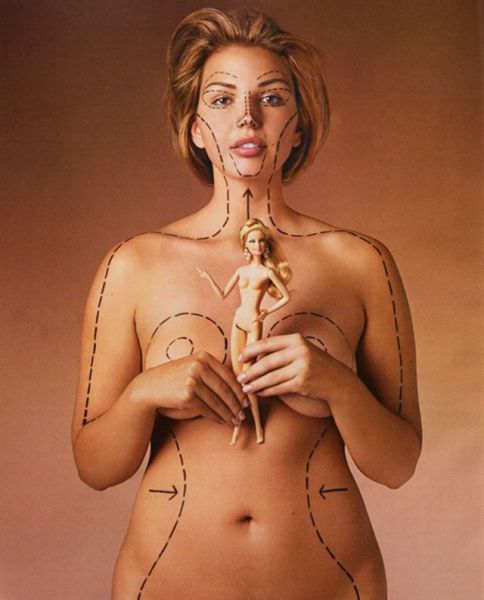
Scary. Unnatural. Those are only two words that come immediately to mind.
Yet the figure and hair and makeup of Barbie is what some people seem to want to see soaring over the vault or flying across the pool at the Olympics. But with a body like that, what, exactly, could Barbie hope to do in any athletic event, much less at the Olympics? Her thin little arms couldn’t support her on the uneven bars. Her skinny little waist could never contain the strong core muscles to lift her body over the hurdles. And that scrawny (scary) neck? It doesn’t appear that it would hold her head up high enough to see the crowd.
When I see someone like sprinter Sanya Richards-Ross moving like the wind across the track, her muscular body rippling with the effects of all that training, and then hear someone ask, what’s up with her hair, I can’t decide whether to laugh or scream or cry.
Read Full Post | Make a Comment ( 4 so far )Outpacing My Pace
It’s official: I’ve stopped wearing my watch during races. Why time myself when there’s a chip and a big clock to do that for me?
Actually, I’ve decided to stop wearing my watch for a really good reason. I run faster without it.
It might sound crazy, but it’s true. I’ve always had this idea that I am a 9 minute miler. My watch has been witness to this truth. On good training days when I push myself hard, I may be an 8:45 minute miler, and on harder days when I’m still pushing myself, I might be a 9:13 minute miler. Any way I’ve calculated it, I’ve averaged out to 9.
For the past couple of years I’ve been mostly ok with this. I injured my hip training for a marathon two years ago, and for too many months I couldn’t run at all. When I started to run again, I was happy to slide back into 9. Just like before.
I wear a Garmin to track my mileage and my pace, though I don’t really need to track my mileage. I know all the routes that lead from my front door and can turn around (or not) when I hit my mileage mark. But I like to track my pace. Because I’d like to get faster. (Which is why I started doing sprints again after taking a few weeks off.)
One recent morning I was out for a run, cruising along at a pretty good clip. I felt good, like I could keep that pace for at least a couple more miles. Since it felt faster than usual, I thought I should check to see how fast I really was running. I was astonished to find that I was running—and holding—a 7:48 minute mile.
I was so astonished, in fact, that my mind made sure my britches didn’t get too big, running so fast. Whoa, it said, slow down there, princess. Who do you think you are running so fast? You’ll never maintain it. You’re a 9 minute miler, not a sub 8!
(No, my mind doesn’t really call me princess—it doesn’t call me anything.)
And what did my body do? It obeyed, and slowed me right back down to the “right” pace.
A couple of days later the same thing happened. I felt like I was running faster than usual and verified my pace: I was running an 8 minute mile. This time, however, when my mind told my body to stop, I intervened. When my mind said you can’t maintain this pace, I said why not?
As it turns out, I can. If this is true, then why haven’t I? It seems I have done in running what I do in life—what most of us, I would argue, do in life. We tell ourselves that we are (or are not) a certain kind of person or that we do (or don’t do) a certain kind of thing. We often unconsciously create an image of ourselves—good, bad, or indifferent—and we become that image. We set the standard, the pattern, the status quo, the place we “belong,” and allow that space to become our comfort zone. Often, we stay there. Rarely do we stray.
We are what we think. We do only what we believe we can. No more, no less. In other words, we are limited by our minds.
I have run only two 5Ks in the past year+, 14 months apart, one with training preceding it and one without. For the first 5K I forgot my watch and kicked myself during the whole run. I must have kicked myself pretty hard, because I ran an 8:07 minute mile. For last weekend’s 5K, I intentionally left my watch at home. I ran an 8:12 minute mile, proof to myself that I am not what I thought I was. Happily not.
Now my task is to figure out how to monitor my pace to become faster without actually monitoring my pace. I’ll have to learn to run with a watch but not look at it. Maybe I should strap it to my ankle.
Read Full Post | Make a Comment ( 2 so far )In Medias Res
This post is longer than usual for me, in large part because it’s a complicated subject for me. I suspect it is for others too. Goals. Not goal setting, which many of us do, but goal revising, which many of us stop short of doing and choose instead to call our missed goals failures.
I have set my share of goals, most of them fitness-related, especially in the past decade. (Note: When you start talking about your life in terms of decades, you know you’re getting old.) Sure, I have set work-related goals. For the most part, they’ve been called deadlines. To my way of thinking, that’s not quite the same thing as setting goals.
Many people use New Year’s resolutions as their goal-setting strategy. But the idea of making resolutions has always bugged me—why pressure myself to set goals during this monumental goal-setting time once a year? And if January passed and I hadn’t resolved to do much of anything, I was off the hook for another year, drifting about on the Nonplan Plan, which is what I did for a year or two. Maybe three. Which is, perhaps, why New Year’s resolutions bugged me.
I know a bit about goal setting and time management. I’ve taught the principles and the actions and I know what I’m supposed to do: Set big (challenging), specific, measurable goals with realistic deadlines, long and short. Write them down. Read them regularly. But other than fitness-related training goals with the requisite plan tacked on my refrigerator, I hadn’t written down any goals. Instead, I kept them in my head. Picked a vague date. Figured I’d make it. Or not.
So this past January, I tried something new. I made two lists, one of priorities and the other of short- and long-term goals, and taped them to my bathroom mirror. They were the first thing I saw every morning and the last thing I saw every night. And since I work from home, I saw them a number of times in between.
I listed my priorities first. My goals wouldn’t mean much unless I knew what larger picture I was trying to paint. Additionally, no matter what I have planned on any given day or week, life happens. The time or effort I have to put toward my goals often conflict, and I have to choose. Reminding myself of my priorities makes it easier to know what choice to make. At least in theory.
My priorities, listed in order of importance, looked like this:
- God
- Health
- Relationships
- Writing
- Work
My logic went something like this: Life is not about me, it’s about serving others (God). In order to serve others to the best of my ability, I need to take care of myself (Health). The things in life that mean the most to me—the things I serve—are not things, they’re people (Relationships). The abilities, skills, and passions I have to serve others with are gifts, and gifts are meant to be opened, not kept under wraps. I am blessed with the gift of writing—what can I do with my writing to help others see (Writing)? I am blessed with the ability to run—how can I extend my life-altering passion to others (Work)?
Under each priority, I jotted down a few phrases about what the priority means to me. Under God, for example, one of the things I wrote is to keep my light on a table, not under a bushel. Under Health I wrote only one thing: You know what to do. Just do it. (Clearly, I have set the most goals in my life around this priority.)
Next, I wrote out some goals: 8 for the month of January—specifically under the priorities I knew I would struggle with most; five 3-month goals (end of March); three 6-month goals (end of June); and two one-year goals (end of December). I intentionally set fewer long-term goals, as I knew that 6 and 12 months were too far out to set very specific goals, and I would need to revise accordingly.
Revise accordingly. This is where I am now.
I achieved 7 of my 8 January goals. By the end of March, I achieved only 2 of 5. I am on track to achieve maybe 1 of my 3 June goals and maybe 1 of my 2 December goals. I took the papers off my mirror at the end of April. Not because I failed. But because I choose to succeed.
I fail now only if I choose to do nothing. I succeed if I revise.
Revision, as it turns out, can be pretty tricky. It’s a lot like what Ernest Hemingway said about writing: “There is nothing to writing. All you do is sit down at a typewriter and bleed.”
Revision means not only reevaluating your goals, but why you set those goals in the first place. The goals that I haven’t met, for instance, can be lumped into two categories: those that depend on others to achieve and those that have to do with writing. Once I can see a pattern emerge—two categories—I can figure out how to revise.
Goals that depend on others to achieve, as it turns out, are not really goals. At least not my own personal goals. Unless I checked with those “others” to see if their goals align with mine. If I haven’t, then I’ve set unrealistic and probably immeasurable goals. Every single goal I missed in this category has to do with work.
I feel so passionate about the mission of my organization and I see very clearly in my mind where I believe we need to head. My vision, however, doesn’t match my past few months’ experience. Does this mean that I should ditch the organization and our goals because we’re not where I wanted to be?
Hardly. Rather, I can use life experience to reshape not only our goals, but my goals. I can learn what to measure, understand what’s realistic, and check with others first. Then I can set new goals, making sure to set goals that are “mine,” not “ours.” There is most certainly a place for “our” goals, but that place is not necessarily on my bathroom mirror.
The other category of goals I didn’t meet has to do with writing, which is pretty high on my list of priorities. It’s the first of things I “do” after things I “am.” In other words, it’s action rather than character. Sort of. Because I am, and have always been, a writer, whether I have been a paid writer (sometimes) or not (most of the time). Writing, writers know, is part of one’s essence.
If a priority is that high on my list and I fail to meet most of the goals associated with it, then, as painful as it might be to even suggest it, maybe my priority is not really a priority. My boyfriend reminded me of this indirectly just the other day. I can’t very well get my book published if I’m not sending it out to agents. And I can’t get a novel published if I haven’t yet finished writing it.
So why haven’t I been doing the things I know I need to do—that I really want to do? In part, it’s because of competing commitments and accountability. If there are X hours in a day and I have set aside a block of them to write but a work issue arises that needs to be addressed immediately, there goes writing time. Two goals—two priorities—competing for the same block of time. Which one wins?
Technically, it should be the higher priority on my list. In this case, writing. Practically, what wins is the priority that serves the most people, most immediately: Work. At work, I am accountable to over 100 girls, 30 coaches, 5 sites, and whoever reaches out for information. In writing, I am accountable to only me.
And it’s this thing called accountability that often causes the bleeding and makes us feel as if we’ve failed when the deadline for a goal has passed with the goal unattained. We are, in the end, always accountable to ourselves. Goals are, after all, ours. We set them.
Who says we can’t revise them?
Revision is part of progress. How do I know where I’m going if I don’t know where I am or where I’ve been? I need to set my goals. Measure and monitor them. And when life happens, as it inevitably does—and thank God it does—revise accordingly.
I wish I could say I have done this already and that I have solved my dilemma of competing commitments. But I have not. I am in medias res, and in the middle of things is not such a bad place to be. I will figure it out. And if I’m wrong, I’ll revise.
Read Full Post | Make a Comment ( None so far )A Girl on Track

I am blessed to be involved with a life-changing organization. Girls on the Run© is an empowerment program for girls in 3rd through 8th grade. Its purpose is to show girls that they don’t have to conform to the stereotypes society would impose upon them. They don’t have to give in to pressure—from family, their peers, society. They can choose to be themselves, they can choose to be strong.
They can choose.
You would think by the name that this is a running program. It’s not. Our mission has a much greater scope than to teach girls how to run. They’re kids. They already know how, even if they don’t yet know it, even if they choose not to.
But running, as runners know, is a great tool. Once you learn that you can do it—that you can reach what seem like impossible goals and that your body can do remarkable things—you learn that you can do anything.
You develop confidence. A healthy respect for your body.
I have been blessed to see this becoming (I sometimes don’t really know what else to call it) in many girls, and I have seen the struggle to become in many others. The becoming is beautiful. The struggle is agonizing. I have been watching it in one particular girl this season.
“Eloise” was one of mine 3 seasons ago, when I was her coach in Girls on Track, the program for 6th through 8th graders. You can see in her eyes that she has greatness in her. She is smart, creative, strong. And you can see in the twist of her lips and the tilt of her head the pull from her peers to be something she is not. Dumb. Aloof. Too cool to participate, especially when the boys hang around.
Her coaches this season tell me of the ongoing battle of wills between them and her. She skips the lessons, ignores the coaches, smirks defiantly. They tell her that they want her there but, as with most things, it is her choice to participate or not. Sometimes she chooses not.
But a curious girl, this Eloise. For all her defiance and playing at aloofness, for all her hiding out behind playground equipment and around corners, she keeps showing up. This is, in fact, her third season. And more than anything else she chooses to do or not do, she chooses to run.
Our season ends with a 5K race. The girls train for it during their 10 to 12 weeks of learning to be ok with themselves, and, we hope, learning that they are an important and irreplaceable piece in the puzzle of the world. Many of them do not believe when the season begins that they have it in them to run that far. All of them who come, finish.
In December, Eloise showed up to our 5K race. To get to the starting line, I recently discovered, she walked, alone, 2.42 miles, from her home. I know this, because when I found out, I mapped it.
Our spring season 5K is on Saturday, April 21. The battle of wills between Eloise and her coaches wages on. I think, however, that running will win, and Eloise will be there again. I believe that running gives her a glimmer of her potential. I’ve seen her face when she runs. All the tension disappears and is replaced with determination, joy.
I don’t know for sure if this is how she feels, but if she shows up, I will ask her. I want her to know, again, that she’s on the right track.
Read Full Post | Make a Comment ( 3 so far )« Previous Entries Next Entries »
 More Than Running...