Dodging Hurdles, or the impetus to run
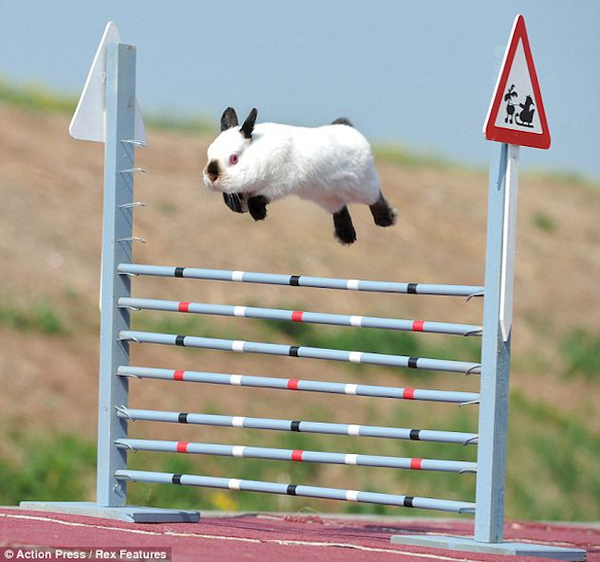
image from cutestlife.com
The first time I took up running it was because of a boy. A crush. I was starting junior high, seventh grade, and he was a year ahead of me. Naturally wavy blonde hair. Blue eyes. Athletic. I was tall and had long legs, and he suggested I try out for the track team. So I gave it a go.
The first day of try-outs, the coach looked at me, my height, the length of my legs and said, “You’re running hurdles.”
Hurdles? You mean my feet have to leave the ground and I need to open my body like a jackknife over that thing that looks like a traffic barricade?
The eighth grade boy nodded vigorously. I gave it a go.
“How about the high jump?” the coach suggested as she picked gravel out of my bloody knees. My body was not built to open like a jackknife. It preferred a straight line. If I could simply run and weave around the hurdles, straight flat-out running, maybe it would be all right.
I kept a brave face, even though my knees stung and the skin hung from them in tiny flecks like shredded cheese.
But the eighth grade boy nodded vigorously. So I gave the high jump a go.
On the first try, I sailed over the horizontal bar. Never mind that it was less than two feet off the ground and I could have hopped it on one foot. The coach clapped her hands and raised the bar twice as high, level with my waist.
I stepped back to the start line, sweating, and eye-balled the bar. Surely I could do this. The eighth grade boy was watching, as was the coach, my friends.
I ran toward the bar, planted my foot at the base, and sprung into the air, landing on my butt in the sand trap on the other side. I heard a sound like a bell clanging, and my forehead stung briefly. I blinked sand out of my eyes, pleased that I had made it, for the split second I thought I’d made it, and tried to stand up.
But all eyes were on me, and all mouths were open.
“What?” I said, but before I could say more, my eyes were forced shut. Blood poured down the right side of my face, into my eyes and the corner of my mouth.
I yelped as my hand flew up, swiping at the blood. I looked toward the bar, but it was not held aloft on the pegs. My foot had hit it, dragging down the support poles, one of which knocked me in the head.
I sat on the curb in front of the school alone and waited for my mom. Several stitches and a concussion later, I decided that running was not for me. And maybe neither was this eighth grade boy.
It would be twenty years until I took up running again. The second time, I took it up because of me.
There would be no one to impress. No one to determine my ability based on my appearance.
No one to tell me how far I could go or how fast, or to place obstacles in my path.
There would be only the long-fingered mango leaves beckoning me down the road in the star-soaked, pre-dawn darkness of Guam.
This time, I more than gave it a go. This time, it stayed.
Read Full Post | Make a Comment ( None so far )Community Trust
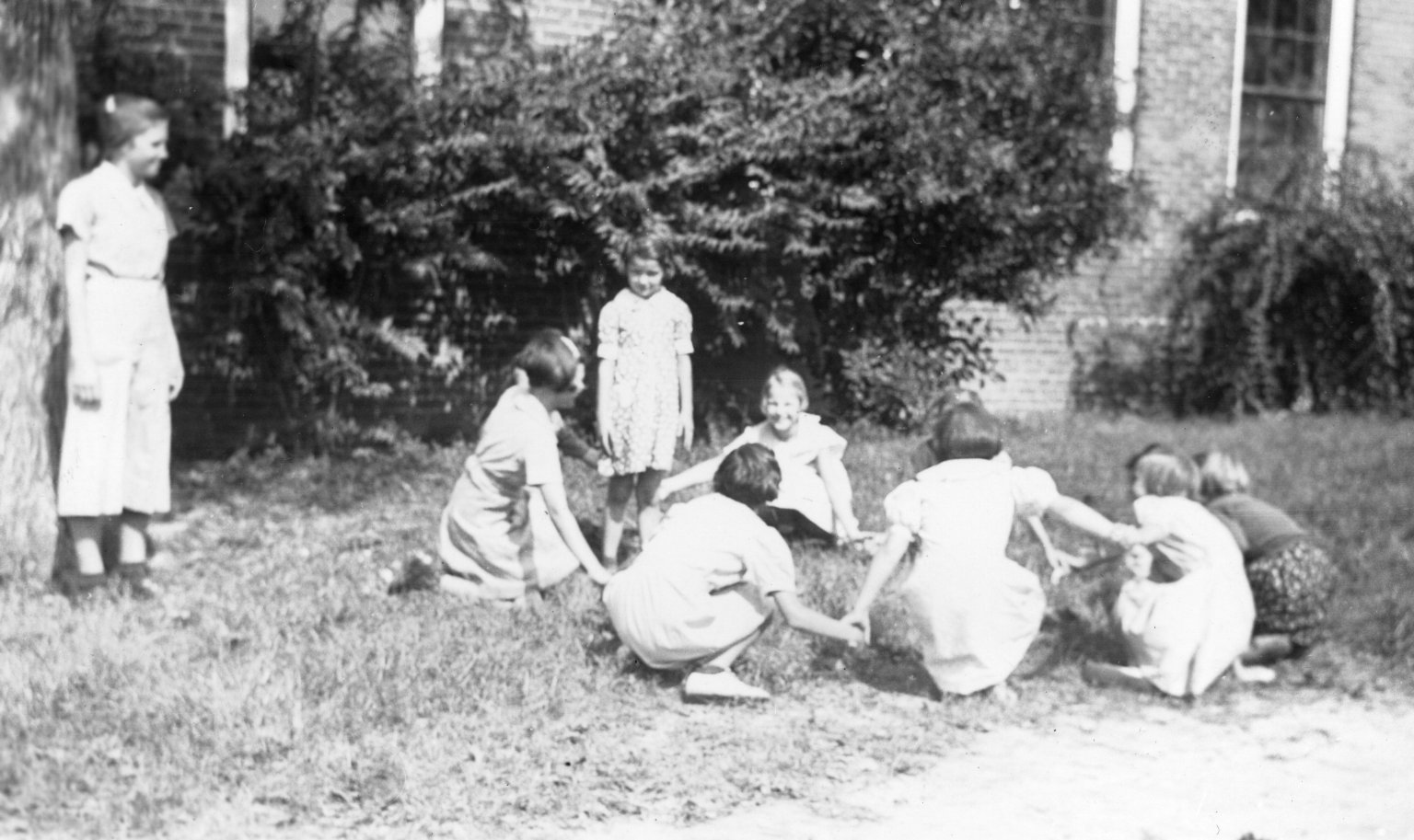
“Trusting.”
Not a question but an imperative. The girl in the middle closes her eyes and tells her team she is ready.
“You can trust us.”
In unison. They are prepared. To bear her weight, right her when she tips too far out of balance.
It’s a risky game for all involved. A frightening prospect particularly for the one in the middle, who must rely on her peers.
And so begin the Girls on the Run lessons in community. I’ve witnessed this lesson half a dozen times over the past several seasons, showing up by chance to observe a team on the day it’s facilitated.
Only I don’t believe in chance.
This time, something about the game strikes me. Why is it that the very first in a series of games to reinforce the concept of community is about trust? There are so many components of community: What we have in common—values, attitudes, interests, demographics, language, geography—and what we don’t. None of that sort of glue requires trust.
Why do we expect these girls to throw their weight on their team, and why do we expect the team to support it? Is it too much to ask?
I sit on a rock in the shade and watch the girls stand vigil, shoulder to shoulder, over the girl in the center, their eyes somber with responsibility. They giggle and squirm but never remove their gaze from the girl who is trusting, and they never lose their footing.
They seem to know instinctively the importance of their role. If they step aside, a gaping hole remains and the girl in the center falls. There is no one to fill their space. Each of them is necessary.
I watch from the sidelines feeling both hollow and filled. Each time I observe a team I am astonished by the wisdom and strength of these young girls, blown away by their mutual encouragement, moved to tears by their interaction with their coaches.
Yet, each time, I walk away feeling alone. Not lonely, but solitary.
I head back to my car mulling over this day’s lesson and the relationship between trust and community. Most of my own involvement in community has been in the outer circle, standing shoulder to shoulder with others. I have yet to spend much time in the middle, as the girl who is trusting.
I chuckle at the realization and my emptiness dissipates. I have witnessed this lesson half a dozen times over the past several seasons. Today I finally get it.
I don’t believe in chance.
Read Full Post | Make a Comment ( None so far )En Pointe
I’ve never been a “girlie” girl. Until quite recently, I refused to wear pink. I’ve never been big on dresses or diamonds or bling. Other than a couple of unfortunate teen years (why didn’t anyone tell me my hair was so big?), I have tended to shy away from curling irons and bows.
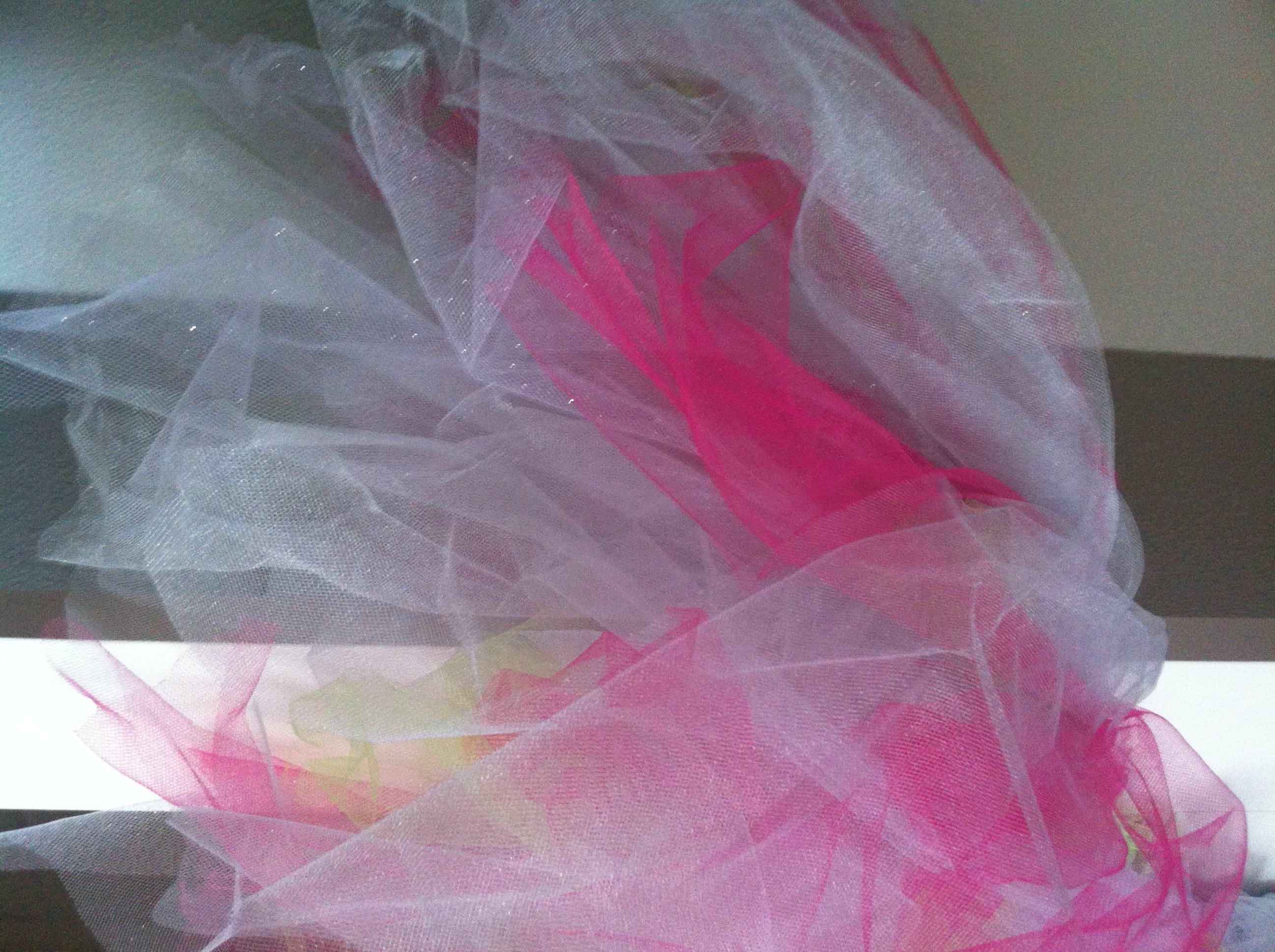
So when my friend, a running coach, made tutus for us to wear last weekend to her training run—big, froufy, glittery, pink and green and white tutus—you’d think I would have refused. Not that she gave me a choice: “I’m sorry—it’s not really a question. It’s just what we’re doing.”
But I did not refuse. We wore our tutus, and for good reason.
Our point was to support Monika Allen, a runner, business owner, and board member of a Girls on the Run council in San Diego who was treated meanly by SELF magazine for running the 2013 LA marathon in a tutu.
Monika had lots of good reasons to wear a tutu, but only one really matters. She wanted to.
Monika had lots of good reasons to run a marathon. One in particular stands out. She was diagnosed in 2012 with inoperable brain cancer and this was her first marathon after undergoing chemo. She was out there to prove to herself that she could do it. She was out there with the support of her friends. She was out there simply being herself. Her bold, beautiful, joyful self.
I was proud to wear this tutu, proud to support someone like Monika and what she stands for. Proud to be part of a program like Girls on the Run that empowers girls to be true to themselves, to not do the kind of thing SELF magazine did.
And I discovered something about tulle and glitter: I like it. No, I love it. How can a person not smile when wearing a tutu? I have never had so much fun running a practice 10k, ever. And I have never seen so many early-morning-grumpy-looking drivers smile so readily as they drove by. How could they not? Tutus spread joy—and a fair amount of glitter—to—or on—all those around them.
My tutu hangs on my office door, where I can see it every day. It reminds me to be strong in the face of adversity. It reminds me to be myself, no matter who’s looking, or who’s not. My tutu will not hang there indefinitely. I fully intend to wear it again, and soon.
Read Full Post | Make a Comment ( None so far )
What Would You Give?

For years I have not observed Lent. At first because I dropped out of the church, and then later, when I dribbled back in, because I got tired of seeing Lent trivialized. It’s not the latest diet, the Lenten 15, say, a plan to drop those last stubborn pounds in anticipation of swimsuit season. And it’s not an excuse to cut out meat on Fridays, only to show up at your local fish monger and indulge in lobster.
I, of course, have done these things in the name of Lent. Deprived myself of chocolate and Fritos or wine and beer in an effort to reach an objective that was personal and selfish, not communal and considerate of others. I have established my goal, created my plan, and expected my God to follow along granting my desire. Like Aladdin’s genie, but maybe not so blue.
I have thought that if I could demonstrate to God my ability to deprive myself of certain things, then He would reward me. With what, I wasn’t sure. Nice things, a great job. Happiness, maybe. A medal.
I have even made running my idol, expecting God to affix wings to my heels.
But, as Woody Allen asserts, if you want to make God laugh, just tell him your plans.
What I’m figuring out, I think, is to focus not on the goal or the plan but, rather, on the gift, the ability God has given me. Like writing. Compassion and empathy. Mercy. And even running. And to remember that these gifts are not mine to keep. Gifts are meant to be given.
So the question I face this Lenten season is not what do I deprive myself of. Not exactly. I know that I can be self-disciplined. But what do I give of myself. What can I offer to others so they can be happier, better, stronger? How can I bring someone joy or compassion or love? Consciously and deliberately. Not accidentally or incidentally.
It’s Ash Wednesday today, the day I write this, and I’m still not sure how to observe Lent. A funny word, “observe.” Implying that we will hang around and passively watch something happen rather than actively participate. But action is required. It is the end of reflection.
And, I think, it’s never too late to pare ourselves down to the bone, to become less in order to give more.
Read Full Post | Make a Comment ( None so far )Juggling Oranges

Tuesday was one of those days I wondered why I do what I do for a living. Why, exactly, am I here? Nothing was going as planned. The day was supposed to be devoted to grant writing. A deadline is coming too quickly. Just a matter of days.
The disruption started at 5:42am with one crisis and then continued until well past 7:00pm. It’s always the small things that get you, and the immediacy they demand. A coaching situation to resolve right now, a shortage of supplies at three sites to be remedied today, a promise to 18 girls that must be kept.
The confusion in time zones that causes you to miss a call you’ve had scheduled for two weeks.
And then the big things: Remember that conference on Thursday? Guess what? You get to deliver a piece of it. Start preparing. Oh, and, to help, our team will have a one and a half hour conference call this afternoon.
Timing is everything. How to participate in a conference call while driving to three sites and take adequate notes while running supplies into buildings? We are on point number two in the call, two points away from my piece. Surely I have time to sprint up to the school with 15 pounds of oranges, drop them where they belong, and sprint back to my car with my phone on mute before they ask me for my input? Barely. But I try. I can still answer questions out of breath, car door slamming, engine starting before I break three laws and drive in a school zone with my phone on speaker, resting on my knee.
But I am irritated. Anxious. There is too much to do and not enough time. I hear my other line ringing and messages piling up. Hear texts chiming, emails accumulating. My eye is on the clock and I’m thinking about the grant and remembering the other phone calls I was to have made today. An office day, it was supposed to be, an administrative day. A day to write that grant.
As I sprint two blocks from my car to the last school, up two flights of steps, and down the hall juggling another 15 pounds of oranges and my phone, muted conference call still going at my ear, I see her come out of the bathroom.
I don’t know her name, but I know her, this little girl. We met last week when I subbed for her team. She is shy, chubby. Tilts her head down and smiles bashfully when she sees me. She is wearing a chain around her neck, the chain she got in Girls on the Run to collect little sparkly feet on. One foot equals one mile. The girls accumulate feet all season as they accumulate miles.
One sparkly foot dangles from her chain. Last week, her teammates each got at least two feet. One girl earned four.
She stops walking and stands there quietly in the hall, rocking a little from side to side.
I know this girl. Shy, chubby, not athletic, wanting to speak but too timid to do so. Waiting patiently just the same. She is me when I was 9, 10.
I take the phone away from my ear.
“You’re wearing your foot,” I say.
She nods slowly, smile broadening, and raises her hand to her chain.
I nod back. “Think you’ll get another today?”
She nods again, a look of determination deepening her smile, and clutches her foot.
“I think so too,” I say.
She raises her chin just a little and walks proudly back to her classroom.
“Hey?” I hear someone say my name and I remember my call. “Are you there?”
“Yes, I’m here,” I take the phone off mute and watch the girl walk down the hall. Now I remember why I’m here.
Read Full Post | Make a Comment ( None so far )Like Mother…and liking it

No wonder I’m a runner. Just look at my mom. No, she’s not a runner. I have, in fact, no memory of seeing her run anytime, anywhere, in my entire life, ever. No. She’s decidedly not a runner.
She’s a shooter, and a darn good one. This year, she will be inducted into the National Skeet Shooting Association Hall of Fame. Quite an accomplishment, and one I am profoundly proud of her for.
You’d think with a mother possessing that kind of ability I’d become a shooter myself. Not a chance. I was never patient enough to shoot well. Plus, the whole thing seemed so involved. Too much equipment—and then you have to clean it. Too much effort to go somewhere other than out my front door to practice. No thanks. Not for me.
For a long time, I didn’t quite understand her obsession—for lack of a better word—with skeet. It wasn’t until I took up running in my early 30s that I began to understand how a person could spend so much time and so much effort doing something that seemed so, well, frankly so insignificant.
But my mom’s obsession is not with obliterating little orange targets. As mine is not with becoming perpetually faster. Medals aren’t the goal for either of us. Becoming a better person is.
In the past several years, I’ve come to see several parallels between running—a pursuit that requires no other equipment than a pair of shoes, can be practiced anywhere at any time, and can result in a conditioned body—and skeet shooting—an endeavor that requires expensive equipment and accessories, must be practiced at a specific venue, and rarely produces an increased heart rate.
Every time we step onto the playing field, we’re competing primarily against ourselves. Sure, it might be nice to actually win something, but becoming good enough to win consistently takes time. Hours and hours of time. Dedication. Persistence.
The goal I want to achieve at almost every event is to do better than I did the last time. Sometimes, my goal is simply to finish, uninjured. But I’m my own biggest rival. My most enthusiastic cheerleader and my worst enemy. Yet with competition comes the confidence acquired when reaching a goal as well as the quiet grace and humility attained when giving it everything yet falling short.
So we practice, because practice breeds perseverance. It makes us better, faster, stronger. More accurate, more consistent. This is, of course, true of any sport, but I’ve seen both shooters and runners practice in the absolute worst conditions. I long ago stopped chiding my mom for spending hours outside in the brutal Michigan winters or the searing Texas summers. How can I chide her when I have practiced my own sport in typhoon stage 3 readiness or cold so piercing that icicles formed on my hat, scarf, and mittens?
I realized, during one particularly cold run when I initially could not feel my legs, that we both live a sort of Senecan philosophy: If one prepares for the worst, she will be more likely to do her best when it counts. It is what self-discipline is made of.
Running and skeet shooting both are solitary endeavors. You might be surrounded by people, but most of the competition is meted out in your head. Your success depends largely on what you believe you can do.
But both are team sports too. Your friends are also your competitors. Mostly, they genuinely want to see you succeed. But they also want to succeed themselves. On the field, you are simultaneously together and alone, so deep in your own head that you could very easily lose the connection with the person standing right next to you.
But you don’t. Because you recognize the critical role support plays and how sometimes the difference of just one word of encouragement (or spite) can make or break you.
Ultimately, both sports are a test of character. Ultimately, neither running nor shooting is a game. How you show up in each is how you show up in life. I’ve seen people I thought were kind and compassionate off the playing field turn into mean, puerile creatures on. And I’ve been pleasantly surprised witnessing an act of kindness from a stranger.
At heart, what we are when we compete is who we are as people.
In all these years, my mom’s character has been refined by shooting. She possesses a quiet confidence in her ability yet a humility I sometimes find bewildering. She continually and sincerely roots for the success of strangers as well as friends. And I have never seen a more graceful loser. I am lucky to have her as a role model, a mother, a friend.
No wonder I lead an organization that inspires joy, health, and confidence in young girls. Just look at my mom. That’s what she inspired in me. In fact, she still does.
She took up shooting at a time when women were not allowed to be members at some clubs. At a time when girls didn’t do such things as shoot guns, get dirty, spend time outside in the cold and rain, in spaces dominated by men. Her family, some friends, much of society gasped in disapproval and said, No, you can’t.
With the determination and dignity she’s always possessed, my mother said, Really? Just watch me, and went on to become one of the best.
How many times in my life has that pernicious voice at my ear told me, No, you can’t. Sometimes that voice is my own. Yet there my mother is, standing beside me, in quiet faith insisting, Yes, you can.
Read Full Post | Make a Comment ( 3 so far )Transformation

I felt like Gulliver, standing in the gym packed with kids and waiting for the Girls on the Run coach. Part of the team was already there sitting on the floor, heads bobbing together over someone’s homework while they discussed the story problem laid out before them. I tried to appear present but disinterested. The last thing I wanted was for them to ask me for help. I’ve always hated story problems.
We spotted each other across the gym at the same time. She locked her eyes on me and wouldn’t let go. I smiled, at first. She was so cute, a toddler with bouncing hair, standing there in her little dress, arm outstretched and finger pointed at…something. I glanced in the direction her finger demanded, but saw nothing of interest. I tilted my head quizzically as she started to run, straight at me, finger still pointing. On the end of her finger was a lump. A rather large one.
A fear greater than the one of story problems overtook me. What was that on her finger? Would she really have the audacity to wipe it on me? And why me, of all the people in here? Should I run, grab her by the wrist in the nick of time, divert her attention with something shiny? Did I have anything shiny? Before I could make a logical and ethical decision, she stopped inches from me. Her eyes had not left my face as she ran, and, although I struggled to retain my composure, I wondered if she sensed my alarm. She smiled widely and raised her arm toward me.
“Look,” she said proudly.
I braced myself and looked. A small, black butterfly perched on her fingertip, its wings quivering slightly.
“A butterfly.” I was relieved and astonished. “Did it just fly up and land on you?” I asked.
“Yes!” she beamed.
We both stared in silence at the butterfly dawdling comfortably on her fingertip until it decided to fly away. She looked back up at me, smiled again, and ran back in the direction she came from.
How strange, I thought, that she chose me to share such a wondrous thing with. How strange, and how lucky.
Read Full Post | Make a Comment ( 1 so far )Rethinking Pink

I just bought a new pair of running shoes. Bright purple Asics. Very unlike me. I’ve always hated purple.
A year ago I would have balked at the purchase, told the salesperson to take them back, thank you very much, I’d rather have a pair of shoes that maybe didn’t fit quite so well but that weren’t so, well, purple.
But that was a year ago. Times have changed—at least since I bought a pair of bright pink reading glasses.
I’ve always hated pink even more.
When I say hate, I mean loathe. I mean face-squinching, stomach-churning abhorrence. Growing up, my sister and I inevitably received the exact same gift for birthdays and holidays. Exactly the same, that is, with one exception. Whatever the gift was, she got blue. I got pink.
No one ever asked me what my favorite color was. (Decidedly not pink.) No one bothered. They simply bought every article of clothing, bedding, bathing accessory in pink. And you know how it is. Pink begets pink. When one relative saw me with All Things Pink, others made wild assumptions and purchased even more pink. I was forced to live in a Box of Pink.
When I left home for college, I quickly and thoroughly cleansed my world of All Things Pink. I did not purchase one even remotely pink thing until I was well into my 30s: One sweater, a beautiful cardigan with pearlized buttons that the store did not have in black. It sat in my closet, tags dangling, for nearly a year before I wore it—and then, only because laundry was weeks overdue.
Yet just about a year ago when I decided it was time to quit fighting the fact that I need reading glasses, I found myself standing in front of a rack handling a pair of bright pink frames. Pink? I shuddered, yet turned them over in my hands, tried them on, tested them on a label I’d been struggling with in aisle 3. I replaced them on the rack and loitered in the antacids aisle.
Pink glasses. Pink? I paced the aisle, completely dismayed that I was considering buying them. Why, dear God, why would the thought even cross my mind? These glasses couldn’t sit in a drawer for a year. I would need them daily to help me see clearly the very intricacies of life, the things that were right in front of my face.
Then it struck me. Pink. A primary color of Girls on the Run.
Since becoming council director, I’ve faced some of the most challenging days of my life. There’s not a day that goes by where I have to do something I can’t do. Maybe I don’t know how to do it, I don’t have the skill set. Maybe I don’t enjoy doing it and I simply don’t want to. Maybe it’s not my strength. Or, maybe, I feel incapable. Inadequate. That if I do this thing, whatever it is, surely I will fail.
But then I do it anyway. Because it must be done.
And because, as it turns out, I can.
Girls on the Run may be about the girls—empowering them to live outside the Girl Box and to reach their full potential—but along the way, serving them has altered the way I see the world. Inevitably, what I see differently is me.
So I put back the Alka Seltzer, Rolaids, and Tums and walked out of the store with pink glasses, a daily reminder that there is another way to see.
Last year, pink glasses. This year, purple shoes. I figure a new vision won’t get me very far unless I’m willing to take it to the street, give it a good run.
Read Full Post | Make a Comment ( 1 so far )The Tortoise and the Hare
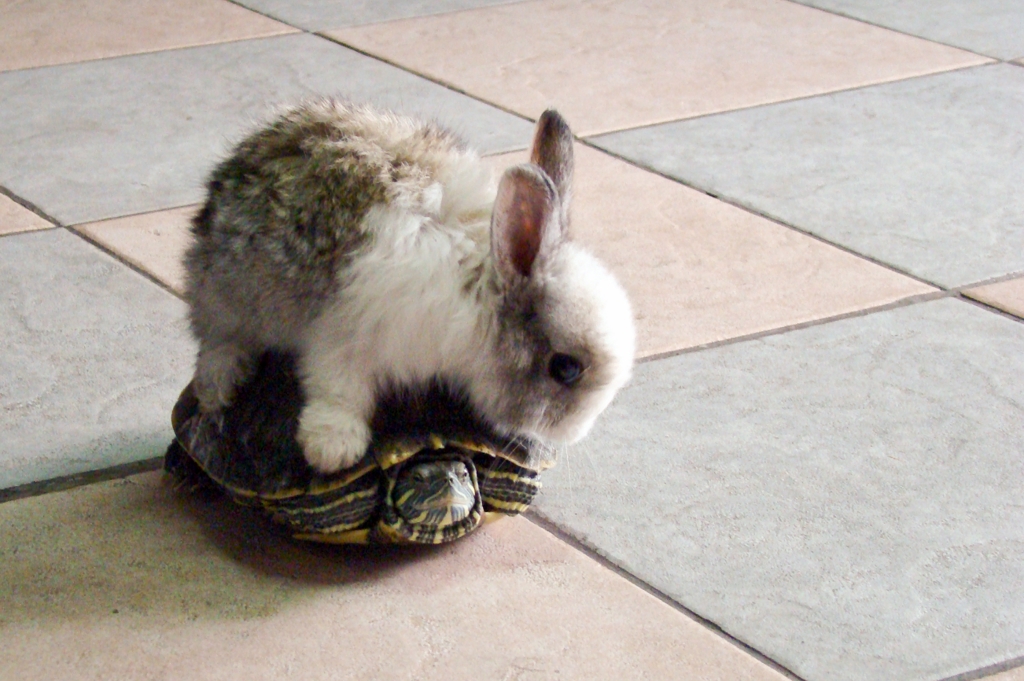
from News to Swallow, meghanandtommy.com
My friend Lissette turned 50 this year. From her friends and family, she requested a unique gift: Run the San Antonio Rock n Roll marathon with her. Her goal is to recruit 50 family and friends to run this November race. The half, the full, the relay; run, walk, skip, jump, she doesn’t care what they do or how they do it, only that they try.
Many months ago when she told me about her request, I promised to be one of those 50. Last month, I registered for the half.
I made out my training plan then, deciding to try something new. The plan I’ve used for years requires 5 to 6 days of running a week. My new plan requires only three: Two days of intense speed work and one long run, plus three days of cross training and one day of rest.
Two weeks into my plan and I can’t decide if I feel like the tortoise or the hare. Not that I’ve ever run as fast as a hare (or would consider napping in the middle of a race like the hare). But I’m finding the speed work days to be not just intense but also fun. And on the days that I run long, the tortoise mantra paces me: Slow and steady, slow and steady.
It seems that I’ve found the plan that will get me there, as one among the 50.
Read Full Post | Make a Comment ( None so far )Next Entries »
 More Than Running...