Anger Management, or how running could save the world
I’ve been feeling a bit out of sorts for a week or so. Not physically—I’ve been doing a lot of strength training, circuits, and swimming—but mentally. Emotionally. Spiritually. Whatever you want to call the blend of those other essences that make us who we are. Something simply hasn’t been right.
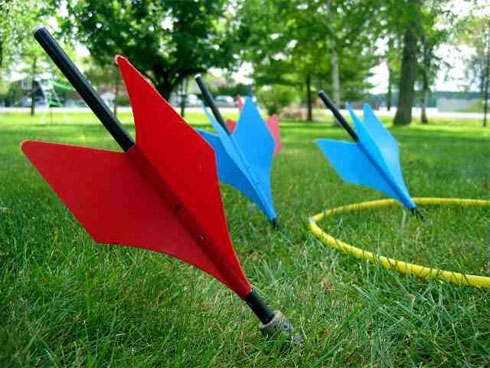
I don’t like it when something isn’t right and I can’t identify it. I feel it in my diaphragm, mostly, that space between the stomach and the heart, both of which are inevitably effected, like someone has been playing lawn darts in there and abandoned them where they stuck, and I’m left walking around dragging daggers behind me.
I’ve spent so much time in the gym these past two weeks that until this morning I haven’t been outside to run—just run and nothing more—for nearly 10 days. So yesterday, I set out from my house before dawn, alone. My favorite time and way to run. I always say that, always remember it, know it in my head, but I believe I actually forget the real reason why I love it until I’m out there running.
When I set out alone in the wee hours, I dragged the darts behind me. The heaviness made me angry. I didn’t realize this until I was about a mile and a half down the road, looked up from my reverie, and thought, how’d I get here already? I felt my legs moving fast and my body standing stiff and tall and I recognized that it was the quickness of anger that moved me.
But angry at what? is what I wanted to know. It’s been a good week—all seems right with the world, on the whole—and I couldn’t place the anger. So I kept running, letting my anger and the darts propel me down my path, until an amazing thing happened.
Somewhere between miles 2 ½ and 3, the darts fell away and my anger dissipated. Why? Because somehow, simply in the act of running, I found an answer. The issue that had twisted me all out of sorts had a name. Anger wasn’t the real issue, it was a symptom, and I could suddenly identify what it was that had been bothering me. I didn’t yet have a solution, but the issue finally had a name.
This, I was overjoyed to remember, not only in my head, but in every limb and organ in my body, is why I run. Alone. Before dawn.
There is nothing more therapeutic than pounding the pavement, letting whatever it is that ails you have the space to actually ail. By the end of my 5 mile run, I knew what the problem was and how to address it. What a relief.
And what a reminder. I need to run alone before dawn more often. Simply to keep clear and balanced.
Now, if we could get the whole world running, imagine what kind of problems could be solved.
Read Full Post | Make a Comment ( 2 so far )What Would Barbie Do…in the Olympics?

from Economic Times, India Times
I love the Olympics. And although I root for the USA in every event they participate, I have to admit that what I watch for is not necessarily nationality, it’s ability. The athletes who make any Olympic team are extraordinary. Watching them gives me goosebumps at the least, and sometimes brings me to tears. The perfection and grace of movement in rowing, diving, sprinting, pole vaulting, gymnastics is simply stunning, particularly since the athletes make what they’re doing look so effortless. It’s easy to forget all the blood, sweat, and years, all the training and discipline and sacrifice that lead to this one event. It blows me away.
So when I heard comments about Gabby Douglas’s hair, I was, well, perplexed. Here is a woman who won the gold medal in the gymnastics all-around event and is a member of the U.S. team that won a gold medal—the first team gold for the U.S. since 1996—and people are talking about her hair?
It gets better. Some people are actually calling some Olympic women athletes fat. That’s right. Olympic athletes—some of the fittest people on earth—fat. It doesn’t seem to matter that they’re bodies are conditioned to support them in their chosen field. It doesn’t seem to matter that many of them set or break records. What makes the news is that some swimmer or sprinter doesn’t look as “fit” as in the last Olympics. Or that another one is “carrying too much weight.”
And we wonder why so many girls have eating disorders or body image issues when even the fittest of us are scrutinized as if we were a side of Kobe beef.
I wish I could say I am surprised, but, sadly, I am not. This Olympics marks the first time women are competing in every event, and from every country. This year also marks the 40th anniversary of Title IX in the U.S., the law that opened the door for women’s participation in sports where they did not have access before. Undoubtedly, more women are competing at a higher caliber because of the opportunities afforded by this law, yet those discussions and those women are not what’s making the news.
Perhaps coincidentally, another story making the news this week has to do with Barbie, the 53-year-old who never ages. Now, I played with Barbie as a kid. She usually teamed up my brother’s GI Joes to battle the evil Rock ’em Sock ’em Robots. But it never occurred to me to see her form as an aspiration. In my mind, that would have been like trying to force myself into the shape of a pine tree or something equally ridiculous. I just wasn’t made that way, and, alas, I lacked the Wonder Twins super powers.
Model Katie Halchishick decided to make a point this week. She marked her body with dotted lines, the way a plastic surgeon marks bodies before rearranging them. The lines correspond to what a Barbie doll would look like in real life.

Scary. Unnatural. Those are only two words that come immediately to mind.
Yet the figure and hair and makeup of Barbie is what some people seem to want to see soaring over the vault or flying across the pool at the Olympics. But with a body like that, what, exactly, could Barbie hope to do in any athletic event, much less at the Olympics? Her thin little arms couldn’t support her on the uneven bars. Her skinny little waist could never contain the strong core muscles to lift her body over the hurdles. And that scrawny (scary) neck? It doesn’t appear that it would hold her head up high enough to see the crowd.
When I see someone like sprinter Sanya Richards-Ross moving like the wind across the track, her muscular body rippling with the effects of all that training, and then hear someone ask, what’s up with her hair, I can’t decide whether to laugh or scream or cry.
Read Full Post | Make a Comment ( 4 so far )What Makes Us Ready to Listen?

This week my boyfriend decided he likes running. He never really liked it before now for a variety of reasons, including debilitating knee pain, which would make me not want to run either. But this week he thought he’d give it another shot. What motivated him to try to run? Not me. (I know, can you believe it?) Nope, it was timing.
Robert has a longtime friend who he doesn’t see much anymore, though they keep up through Facebook. His friend absolutely LOVES to run, and posts about it regularly. A few days ago, this friend posted something that caught Robert’s attention.
He said he runs because he can, and one day he may not be able to.
Now, I know this particular message has been out there in many forms from many sources for many years. It’s one of those things we hear repeatedly, and maybe don’t pay too much attention to. But then one day something clicks. We pay attention. We don’t just hear the message. We process it. Why? Timing.
I don’t know what else is going on in Robert’s mind that made him process the message differently this time. But that’s the beautiful thing about our subconscious mind. It’s always working on something, secretly, even when we’re asleep. I’ve taken to thinking of this part of my mind as a little cellar, dark and dank and growing all kinds of stuff, with little elves running around in there, creating things, or at least tending to the heaps of things already growing. When the creation is ready, the elves crack open the cellar door and hand it out to me. Then, it’s up to me to do with it what I will.
What Robert chose to do with his reprocessing was to run, to at least give it another try. Because it finally occurred to him that right now, he can. Maybe in a year or two or twenty, he won’t be able to.
Maybe he realized that ability is a gift, a present of the present moment. How wonderful to use it as it’s meant to be used.
Read Full Post | Make a Comment ( 4 so far )Too Many Crutches, Too Few Legs
Last week I wrote about my sister’s legs, specifically how their tremendous strength has aided her in running and biking, and that because of what I have seen her accomplish I have changed my routine.
Even though running has been my focus for years, I have incorporated strength training into my routine in fits and starts. I’ll get on a weight lifting kick for a few weeks or months, decide that it’s taking valuable time away from running, and eventually peter out. After a month or two of running, I’ll decide that I need to give strength training a whirl again, so I hit the gym once more in an attempt to work in a new weight routine.
I’ve always gone in, however, knowing that it wasn’t for the long haul, that I’d probably be tapering off again soon. And I’ve always gone in with the intention of working primarily on my upper body, to keep it toned. Now, I like Batman, but that doesn’t mean I want big ole bat wings hanging under my arms, flapping around in the breeze (or causing the breeze) every time I raise a hand.
Focusing on my upper body means that I’ve laid off strength training for my legs. Until the past few weeks, that is. As I’ve seen my leg strength increase and, ultimately, my running, biking, and swimming improve, I’ve wondered why the heck I haven’t done this before. I realize now how much I’ve rationalized leaving my legs out of my routine. Here are some of the “reasons” I’ve given myself for not strength training:
- I am recovering from an injury and don’t want to aggravate it.
- My leg muscles get worked out enough when I run.
- If I work out my legs, I will be too sore to run for a day or more afterward.
- I already do sprints, which work muscles in a different way than simply running, so I don’t need extra strength training.
- I usually have to take a rest or easy day the day after sprints; I can’t afford to take more rest or easy days after strength training too.
Here’s what I now say to all that: poppycock.
While it’s imperative to listen to your body and let yourself heal properly as you recover from an injury, at some point the fact that you were injured might become an excuse that keeps you from reaching your full potential. At least that’s what happened to me. I was injured almost two years ago. And while I still experience pain from my injury from time to time, I have learned my limitations. If a particular exercise hurts, I simply don’t do that one. But for the moves I can do, I now lift as much weight as I safely can, always pushing myself beyond what I thought was my limit. I have been shocked in the past few weeks to see how much weight I can actually lift with my legs.
It’s taken me a couple of weeks to realize how much strength training has actually helped rather than hindered my running. I still do sprints. And now I work my legs. I have figured out a way to minimize downtime: I do sprints and legs on the same day.
This, of course, was my sister’s brilliant idea. It actually has turned out to be pretty brilliant. On this combo day, I start with a couple of sprints (400s) followed by a leg circuit on six machines: squats, calves, quads, hamstrings, deadlifts, and side step with a leg raise. Then I immediately do another sprint. I can hit the circuit 4 times, and I usually end up doing a total of 6 sprints. I am getting faster on the sprints and am able to lift more weight each week. And I only had down time the first week. Now, instead of running the day after legs and sprints, I swim.
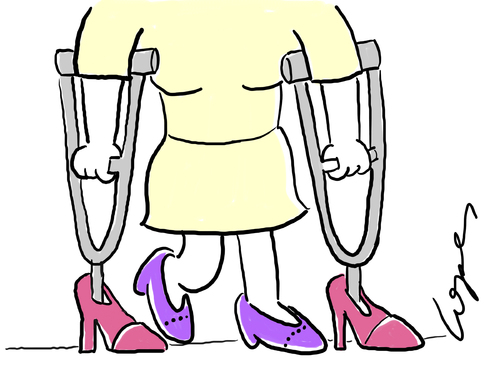
The thing I’ve found about rationalization is that it is often irrational. That’s where excuses come from, crutches, to keep us from reaching our full potential. What drives the rationale? Fear, usually, at least in me. I now realize that I have 5 crutches and only 2 legs. Somewhere, something became unbalanced. It’s time for me to lose the fear and gain the strength.
Read Full Post | Make a Comment ( 1 so far )Who’s the Chick with the Legs?
That’s the question a group of women asked after our last Girls on the Run 5K. That chick is certainly not me. It’s my sister.
Marika has the hardest—but the best—responsibility at our 5K events. She’s the course monitor. It is her task to run the course in circles, ensuring that each girl sticks with her running buddy. When Marika encounters a girl running on her own, she asks where her running buddy is. If the girl points behind her and says, somewhere back there in the dust, Marika pairs her up with the nearest buddy team keeping the girl’s pace. If the girl is alone because she’s too tired and discouraged and ready to quit, my sister encourages her along, refusing to let her stop. For the last half of the race Marika runs the quarter mile before the finish line, back and forth and back again, like a pinball ricocheting between two levers, guiding every girl and her running buddy to the finish line. I have seen her take a number of girls by the arm or around the waist and virtually carry them just short of the line, where they cross on their own.
I have seen her do this—and more—because I have the second best responsibility at the race. I get to stand on the other side of the finish line and help the coaches put medals around the girls’ necks as they finish the race. Think you can’t run or that there’s not much rewarding about doing a 5K? Check out your local Girls on the Run council’s next 5K. I can almost guarantee you’ll walk away completely uplifted and probably in tears.
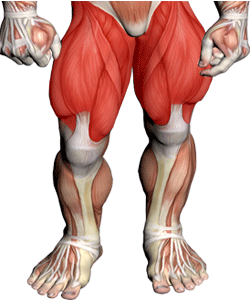
But I digress. We were talking about my sister’s legs. My sister is assigned the hardest job—running in a very short time more than double the 5K—because she has the strongest legs. I wish you could see for yourself, but Marika is modest and refused me permission to post her picture. What you would see is quads like braided bread. Something like this:

Well, maybe not quite like this, but you get the picture. Marika didn’t get those quads from running. She has been running for almost 3 years. I have been running for 10. For years, I tried to get her take up running, but for years she refused. Each time I brought it up, she pulled out her arsenal of studies demonstrating the damage running does to the body, particularly cartilage and joints.
Marika chose, rather, to strength train, and has been doing so consistently for 5 years, intermittently for maybe 3 years before that. For years, she tried to get me to take up strength training, but for years I refused. I wanted to focus on running—what did I need muscles for? My leg muscles would be just fine, thank you very much, from the workout I gave them on each day’s run.
Or so I thought.
When Marika finally took up running in 2009, she did so for much the same reason I did. She was trying to work out a problem and needed fresh air to help her think, so she went out walking. Some issues are too big to be confined by four walls and a ceiling, and they need a large expanse of sky and open space to be properly taken out and turned over, mulled through and examined.
It was during one of her walks at dusk in the late fall that she was caught in the rain about two miles from home. It wasn’t a nice Texas mizzling kind of rain, part drizzle, part mist. It was a cold, pelting, stinging rain that she wanted to escape. The quickest way to get home was to run. Somewhere in that two miles, something clicked.
Two weeks after Marika ran, I was set to participate in a half marathon, for which I had been training. She thought she’d give it a try too. She had been running for only two weeks, mind you, before she entered this half marathon.
She beat my time by 5 minutes. I couldn’t decide if I was awed or ticked.
(What’s the difference between friendly non-competitiveness, healthy competitiveness, and the urge to pummel someone to the ground? I don’t know either, but I’m working on it. When I figure it out, I’ll write about it.)
Granted, Marika has a strong cardiovascular system. There is no way she would have been able to complete a half marathon without one. But I am convinced that her strength drove her along. She has been running ever since—and running fast.
But that’s not all. I finally convinced her to enter a sprint tri with me. We trained together for 8 weeks to compete in the Gator Bait race just last month. She whined the whole time we trained. Although she had a bike, she hadn’t actually been on it in a couple of years and couldn’t remember how to shift gears. The first two times out, she wiped out and scraped her knees and, we think, broke a bone in her hand. Swimming was even worse. Although we had grown up on water, Marika had never swam laps in a pool. Half way through a lap, she was sputtering for air.
Don’t worry, I told her, I’ll teach you everything I know about biking and swimming. It might not be much, but it will get you through the race. Do it for fun. This is only about fun, not really competing, and not winning, but only to see if you can.
I knew I was in trouble on our fifth or sixth bike ride when she powered past me up a hill. I could see her quads pumping like a freight train, while I was wheezing my way up. She barely broke a sweat.
And then she did it again. Come tri day, she beat me. By 7 minutes.
(How do I feel about this? See the above parenthetical.)
I tell you about my sister and her legs and her accomplishments to make a point. Probably several points, but here’s the one I’m sticking with: Strength training is imperative to performance. It doesn’t matter how much cardio you do, how many miles you run or swim or bike, your muscles must be in prime shape in order to serve you to the best of your ability.
Strength training is important for so many other reasons—including preventing bone loss, especially in women, as you age. But I won’t go into all that now. I simply wanted to tell you about my sister.
And what she’s done to my training. Since the sprint tri, my focus has not been on cardio or mileage, but on strength training. I’m in the gym at least three days a week now, and it’s paying off. Last weekend I went for a long bike ride and found that the monster hill at the end of my route is getting easier. Maybe one day soon I’ll be able to power up it myself, and pass my sister.
Read Full Post | Make a Comment ( 4 so far )Between Goals
Last Saturday I participated in the 2012 Gator Bait Sprint Triathlon at beautiful Lake Boerne, Texas. The race was capped at 300, and for the third year in a row it sold out. Redemption Race Productions puts on the race, and this is the first one of theirs I’ve done. They’re a lot of fun and well organized, and they put on some interesting races—like a duathlon that starts in a cave. You better believe I’ll enter that one.
The Gator Bait started with a 500 meter swim—a big triangle out into Lake Boerne, followed by a 13 mile bike up Heartbreak Hill, and ended with a 4-ish mile run through the park. (The run was 4-ish because the park layout recently—and apparently surprisingly—changed, so Redemption wasn’t quite sure how long the run actually was. Relieved is what I was. We guessed it was about 3.5 miles.)
Heartbreak Hill is aptly named—about ½ very steep mile right before the turn-around point. I promised myself at the beginning of the race that I would NOT get off my bike to walk it up. Thankfully, I made it, moving so slowly at one point that I was sure I was going to roll backward down the hill.
I am happy to say that I finished the race under my estimated time, and at a personal best. Yay!
It’s been two years since I’ve done a sprint tri, and I had forgotten how nice it is to hang out for a few hours with triathletes. Everyone was kind and supportive, and it was inspiring to see so many people in such great shape. It made me want to do more triathlons.
But I have spent this week laying low, focusing on strength training and core work, getting ready to hit the cardio hard again next week. It’s nice to be in limbo, on the Nonplan Plan, for one whole week.
But I know it will be even nicer this weekend to pick out the next race, set the next goal, and get focused once again on running.
Read Full Post | Make a Comment ( 2 so far )Diet Is a 4-Letter Word

I had a run-in with my arch nemesis this week. Fritos. He won. What’s worse, he has a friend. Julio’s. If you’re from Texas, you’ve probably seen Julio there on the shelves between his rival corn chips, and if you’ve had him you understand his power of persuasion.
It seems I had a fiesta in my pantry this week. The timing figures—on the heels of my thoughts about garbage. Thankfully, the fiesta is over. Has it affected my training? Fortunately, no. My sprint tri is in two weeks (yay!), and my workouts have been going well. Has it affected the way I feel about myself? You bet. Disappointment is the first word that rolls to mind, like a thundercloud.
But the big question is this: Will my lapse in nutritional judgment this week cause me to change what I eat next week? That is, will I go on a diet? The big answer: Absolutely not. In my opinion, diet is a 4-letter word.
There are dozens of diets on the market, always have been, always will be. Each time a new study touts the superpowers of one kind of food or the evil powers of another, there’s bound to be a book, an infomercial, a talk show segment, or some other media blitz right on its heels. That’s not to say the studies aren’t important. They are. But information is only good when it’s used wisely.
A diet cannot last forever. A healthy lifestyle can. What’s the difference? A diet has a beginning and an end. Many diets require the dieter to eliminate entire food groups or to overindulge in others. They require an exorbitant amount of willpower, which always fails, partly because it is physiologically impossible and certainly unhealthy to eliminate or overindulge, and the dieter’s body will pressure her into balance—which means she eats what she “shouldn’t.” She gets frustrated and quits, or she meets her prescribed time limit and, inevitably, the diet ends.
Most diets also require the dieter to consume less calories than he expends. Makes sense, especially if weight loss is the goal. But often, the number of calories prescribed by the diet is far less than a body actually needs to function—which means the dieter loses energy, gets weak and lethargic. Cranky.
The body knows what it needs. It needs calories to pump the heart, run the brain and nervous system, move the muscles and the bones they’re attached to. If the body doesn’t get enough calories from all the food groups, it goes into starvation mode, slowing down metabolism to conserve energy—hoarding all that fat the dieter is trying to shed.
No diets for me, thank you. I prefer to live a healthy lifestyle. What this means to me is that there is no beginning and no end to proper nutrition. I eat all the food groups, every day. I don’t worry about what time I eat my last meal. My body doesn’t refuse carbs after 3:00. I don’t panic if Fritos wins for a couple of days.
Let me repeat that. Sometimes Fritos wins for a couple of days. But since I’m not on a diet, that’s ok. It’s my mind—my opinion of myself—that pays the bigger long-term price than my body. This is because I have chosen to live a healthy lifestyle rather than to be (forever) on a diet. I know what the effects of saturated fat are on my arteries when the Fritos win. That—and not the effect on the elastic in my pants—is why I’m disappointed in myself.
I do have some general rules of thumb I try to follow:
- If God didn’t make it, don’t put it in my mouth. This prompts me to eat more whole foods and far less processed foods. (Yes, I still try to argue with myself how God did, in fact, make Fritos since he made the people who invented, manufactured, packaged, shipped, and shelved Fritos, the corn that’s in the Fritos, the people who created and operated the machinery that made all the other gunk that’s in the Fritos. You see how it goes. It’s exhausting, really, this kind of logic. Still, sometimes I let it win…)
- Graze like a gazelle. If I eat small portions all day, I feel better. And who doesn’t want to eat all day? When I do, my metabolism runs fast and steady throughout the day. I have less of a desire to overindulge in anything because I’m always satisfied, never starving, and I don’t overeat to the point of discomfort. I know I’ll be eating again in just a few hours. It’s a beautiful arrangement.
- Don’t eat anything bigger than my head. Seems like a no-brainer when it comes to foods like watermelon. But this also means that if I choose to have pizza, I can’t actually eat the whole thing. I would. But I can’t.
These rules of thumb have come after years of learning to listen to my body when it tells me what it needs. They’ve come because I do read the reports about nutrition and exercise. They’ve come because my main goal for my body is disease prevention. If I focus on keeping my body healthy and disease-free, I gravitate to the foods that will do that and steer away from the foods that won’t. In the process, my weight corrects itself. My tastesbuds have more than adapted to whole foods—I actually look forward to them. And I have more energy, more clarity of mind, and feel better than I have in my life.
What are your thoughts about diets?
Read Full Post | Make a Comment ( 7 so far )Garbage in, Garbage out

I love food. Always have. I love to eat it, cook it, smell it, look at it, think about it, and talk about it. Sometimes I even dream about it. But I can’t tell you how many food conversations I’ve had during which one of the participants holds up a hand dismissively and says, “Well, you’re a runner. You can eat anything.”
That sentiment, I’m afraid, I do not love.
Many people take up running because they want to drop a few pounds. They know they need to get some cardio work into their routines—or they need to start a routine—and running seems like a fit. Some lose weight, some do not. The difference? It’s not only the output. More than likely, it’s the input.
I took up running for a much different reason than weight loss. A nice by-product has been that I keep my weight in check. I don’t do this by eating “anything.” I do, however, eat what I want. And lots of it.
A funny thing has happened over the past several years. My wants have changed. I used to be the queen of canned ravioli and packaged macaroni and cheese. Now, you couldn’t hold me down and force feed me either.
Sometimes I think I crave, say, macaroni and cheese, and sometimes I even talk about it for days on end. What I crave is not the food itself, but what the food represents. I now know enough about my body to know that if I did break down and eat macaroni and cheese, 1) I would be immensely disappointed in the taste, and 2) I would feel sick for at least a day, probably more.
The more I’ve run (and biked and swam), the more efficient my body has become at metabolizing food—if it’s the right kind of food. For me, that includes oatmeal, fruit, sweet potatoes, kale, and just about any other vegetable I can get my mouth on. It’s not cake and crackers and pizza. Even if I think I want it to be.
When I eat “anything,” I cannot run. That is, my sleep patterns are interrupted and I feel lethargic the next day. I feel like I’m running with a boulder in my belly, and my legs feel like lead. Those factors do not make for an enjoyable run, at least not for me. And for the rest of the day, I’m not the most pleasant person to be around.
That doesn’t mean that I never eat “anything.” Sometimes I choose pizza or bananas foster over running. But I recognize in the moment that it is, in fact, a choice, the consequences of which I will have to live with the next morning.
You’ve heard people say that our bodies are like machines and need the proper fuel to keep them operating the way they’re intended to. I’m not going to say exactly that, because I believe our bodies are so much more than machines. But there’s something to it. Garbage in, garbage out. Just like our computers. Our eyes. Our thoughts. Our bodies are no different.
So you’re a runner but some mornings a sharp stick in the eye seems like it might feel better than even your 2 mile route? Take a hard look at what you’re eating. Are you serving what you want—and is what you want serving you?
Read Full Post | Make a Comment ( 7 so far )The Art of Swimming, or how Ben Franklin helps me train

Any time I think of Ben Franklin—and yes, oddly, I think of him a lot—it’s never as a swimmer. Yet there I was in the pool this week working on my stroke when who should I think of but Franklin.
Franklin has been one of my heroes, I suppose you could say, since I first read his Autobiography in high school. (I know. I was an odd kid.) What appealed to me about Franklin then appealed to me throughout college and well into now. Franklin was all about self-improvement. He was a planner, a list-maker, an organizer of days and details, who believed that hard work, patience, and discipline lead to progress.
He went so far as to devise a character development project—The Art of Virtue—in the hope of attaining “moral perfection.” To this end, he listed 13 virtues or qualities of character he felt most important, with an explanation or precept beneath each one. He made a chart listing the 13 virtues down the side and the 7 days of the week across the top. Each week, he focused on one virtue.
He carried his chart with him everywhere he went, and each time he failed to live up to that week’s precept, he’d make a mark on the chart. The fewer the marks on the chart, the closer he came to meeting his idea of moral perfection. The next week, he’d focus on the next virtue, and then the next, until he worked his way through all 13. Then he’d start over again.
He kept his chart for 50 years. He never quite reached moral perfection (I highly doubt he ever thought he would), but he became a better man by marking himself through life.
So why was I thinking about moral perfection while swimming this week? I wasn’t. I was thinking about my elbows. Was I lifting them high enough out of the water? Were they coming up in the shape of a pyramid? Or maybe a chicken wing wrapped tightly to the body strapped on a rotisserie, turning maybe 75°, but not quite all the way around, just enough to twist my body up and around to take a deep breath of air? (I know. I am an odd adult too. Sometimes I get hungry while I swim. Usually, I think of oranges. This time, it was rotisserie chicken.)
My elbows. That was my focus, just for this week. Last week it was my kick. Next week it will be something else. Each time I get in the pool I try to practice proper form, but I realized this week that I focus on only one thing. Enter Franklin.
I won’t go so far as to make a list of 13 swimming components I need to improve, but I have one in my mind. In all other endeavors I have undertaken that involve self-improvement, I have made a plan—created a list, kept a calendar, somehow marked my progress and lack thereof. I have done this, in part, to keep from being overwhelmed. A project is always easier to undertake if I break it down into smaller parts.
Triathlon training is easier to undertake if I break it down into smaller parts.
I don’t have to master the art of swimming in just one week. Not even in one month. There are too many components to take into account, at least for me. But if I focus on just one thing at a time—just one week at a time—I will at least get better. And all I ask for is improvement.
So thank you, Ben, for once again reminding me that improvement comes in small measures, over the course of time.
I said that before this week, I had never thought about Franklin as a swimmer. Heck, I never thought of him as athletic at all. Come to find out, he not only taught himself how to swim in a time when almost no one went swimming, but he invented fins. He is, in fact, the only founding father to be in the Swimming Hall of Fame. I wonder what his training log looked like.
Read Full Post | Make a Comment ( 2 so far )In Medias Res
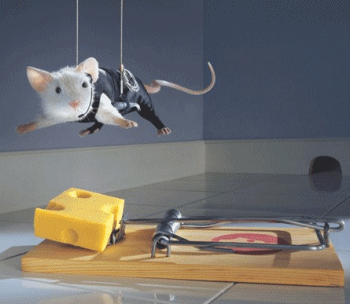
This post is longer than usual for me, in large part because it’s a complicated subject for me. I suspect it is for others too. Goals. Not goal setting, which many of us do, but goal revising, which many of us stop short of doing and choose instead to call our missed goals failures.
I have set my share of goals, most of them fitness-related, especially in the past decade. (Note: When you start talking about your life in terms of decades, you know you’re getting old.) Sure, I have set work-related goals. For the most part, they’ve been called deadlines. To my way of thinking, that’s not quite the same thing as setting goals.
Many people use New Year’s resolutions as their goal-setting strategy. But the idea of making resolutions has always bugged me—why pressure myself to set goals during this monumental goal-setting time once a year? And if January passed and I hadn’t resolved to do much of anything, I was off the hook for another year, drifting about on the Nonplan Plan, which is what I did for a year or two. Maybe three. Which is, perhaps, why New Year’s resolutions bugged me.
I know a bit about goal setting and time management. I’ve taught the principles and the actions and I know what I’m supposed to do: Set big (challenging), specific, measurable goals with realistic deadlines, long and short. Write them down. Read them regularly. But other than fitness-related training goals with the requisite plan tacked on my refrigerator, I hadn’t written down any goals. Instead, I kept them in my head. Picked a vague date. Figured I’d make it. Or not.
So this past January, I tried something new. I made two lists, one of priorities and the other of short- and long-term goals, and taped them to my bathroom mirror. They were the first thing I saw every morning and the last thing I saw every night. And since I work from home, I saw them a number of times in between.
I listed my priorities first. My goals wouldn’t mean much unless I knew what larger picture I was trying to paint. Additionally, no matter what I have planned on any given day or week, life happens. The time or effort I have to put toward my goals often conflict, and I have to choose. Reminding myself of my priorities makes it easier to know what choice to make. At least in theory.
My priorities, listed in order of importance, looked like this:
- God
- Health
- Relationships
- Writing
- Work
My logic went something like this: Life is not about me, it’s about serving others (God). In order to serve others to the best of my ability, I need to take care of myself (Health). The things in life that mean the most to me—the things I serve—are not things, they’re people (Relationships). The abilities, skills, and passions I have to serve others with are gifts, and gifts are meant to be opened, not kept under wraps. I am blessed with the gift of writing—what can I do with my writing to help others see (Writing)? I am blessed with the ability to run—how can I extend my life-altering passion to others (Work)?
Under each priority, I jotted down a few phrases about what the priority means to me. Under God, for example, one of the things I wrote is to keep my light on a table, not under a bushel. Under Health I wrote only one thing: You know what to do. Just do it. (Clearly, I have set the most goals in my life around this priority.)
Next, I wrote out some goals: 8 for the month of January—specifically under the priorities I knew I would struggle with most; five 3-month goals (end of March); three 6-month goals (end of June); and two one-year goals (end of December). I intentionally set fewer long-term goals, as I knew that 6 and 12 months were too far out to set very specific goals, and I would need to revise accordingly.
Revise accordingly. This is where I am now.
I achieved 7 of my 8 January goals. By the end of March, I achieved only 2 of 5. I am on track to achieve maybe 1 of my 3 June goals and maybe 1 of my 2 December goals. I took the papers off my mirror at the end of April. Not because I failed. But because I choose to succeed.
I fail now only if I choose to do nothing. I succeed if I revise.
Revision, as it turns out, can be pretty tricky. It’s a lot like what Ernest Hemingway said about writing: “There is nothing to writing. All you do is sit down at a typewriter and bleed.”
Revision means not only reevaluating your goals, but why you set those goals in the first place. The goals that I haven’t met, for instance, can be lumped into two categories: those that depend on others to achieve and those that have to do with writing. Once I can see a pattern emerge—two categories—I can figure out how to revise.
Goals that depend on others to achieve, as it turns out, are not really goals. At least not my own personal goals. Unless I checked with those “others” to see if their goals align with mine. If I haven’t, then I’ve set unrealistic and probably immeasurable goals. Every single goal I missed in this category has to do with work.
I feel so passionate about the mission of my organization and I see very clearly in my mind where I believe we need to head. My vision, however, doesn’t match my past few months’ experience. Does this mean that I should ditch the organization and our goals because we’re not where I wanted to be?
Hardly. Rather, I can use life experience to reshape not only our goals, but my goals. I can learn what to measure, understand what’s realistic, and check with others first. Then I can set new goals, making sure to set goals that are “mine,” not “ours.” There is most certainly a place for “our” goals, but that place is not necessarily on my bathroom mirror.
The other category of goals I didn’t meet has to do with writing, which is pretty high on my list of priorities. It’s the first of things I “do” after things I “am.” In other words, it’s action rather than character. Sort of. Because I am, and have always been, a writer, whether I have been a paid writer (sometimes) or not (most of the time). Writing, writers know, is part of one’s essence.
If a priority is that high on my list and I fail to meet most of the goals associated with it, then, as painful as it might be to even suggest it, maybe my priority is not really a priority. My boyfriend reminded me of this indirectly just the other day. I can’t very well get my book published if I’m not sending it out to agents. And I can’t get a novel published if I haven’t yet finished writing it.
So why haven’t I been doing the things I know I need to do—that I really want to do? In part, it’s because of competing commitments and accountability. If there are X hours in a day and I have set aside a block of them to write but a work issue arises that needs to be addressed immediately, there goes writing time. Two goals—two priorities—competing for the same block of time. Which one wins?
Technically, it should be the higher priority on my list. In this case, writing. Practically, what wins is the priority that serves the most people, most immediately: Work. At work, I am accountable to over 100 girls, 30 coaches, 5 sites, and whoever reaches out for information. In writing, I am accountable to only me.
And it’s this thing called accountability that often causes the bleeding and makes us feel as if we’ve failed when the deadline for a goal has passed with the goal unattained. We are, in the end, always accountable to ourselves. Goals are, after all, ours. We set them.
Who says we can’t revise them?
Revision is part of progress. How do I know where I’m going if I don’t know where I am or where I’ve been? I need to set my goals. Measure and monitor them. And when life happens, as it inevitably does—and thank God it does—revise accordingly.
I wish I could say I have done this already and that I have solved my dilemma of competing commitments. But I have not. I am in medias res, and in the middle of things is not such a bad place to be. I will figure it out. And if I’m wrong, I’ll revise.
Read Full Post | Make a Comment ( None so far )« Previous Entries Next Entries »
 More Than Running...