Gratitude. It’s what’s for breakfast.
I don’t always jump out of bed with a happy smile on my face. Some mornings I don’t even want to roll out and frown. I have my share of days when I dread getting out of bed, and sometimes I even dread the thought of running.
But one of the things I love about running is the remarkable way it transforms my attitude, usually from cranky to grateful. Most morning runs are like that. My time outside results in more than the physical benefits I get from running. Running shows me gratitude.
By the end of my run, I usually have a mental picture of all the things I am grateful for. Some of them look like this:
G od. For making me. Able.
R obert, my boyfriend.
A ll my family and friends. Even the cranky ones.
T oday, because it’s all I have for certain.
I ce cream.
T omorrow, because with it comes promise and hope.
U rsa Minor. Or pretty much any constellation.
D ogs. Mine: Smaug and Queequeg.
E ars to hear. Eyes to see.
Does running do the same thing for you? What are you grateful for?
Read Full Post | Make a Comment ( 4 so far )What Running Could Teach a Girl
I want to show girls how running teaches them things that can change their lives.
I hear that sentiment a lot as I talk with women who want to become coaches or other volunteers for Girls on the Run. I smile every time because I understand just what they mean. Now.
There was a time, however, when hearing such a thing struck me as completely ridiculous. How could running teach a person about life? All it seemed to teach people was how to sweat a lot and injure muscles and ligaments I had never heard of. How does limping through life with wet socks and undergarments teach anyone anything useful about living? Sheer craziness, I thought.
Until I ran. Now, I am a runner.
Did you notice the way I phrased that? I am a runner. I did not say that I became a runner, or that I learned to run, although both statements are true. Instead, I chose a phrase that defines a present, permanent, pervasive state of being. You could almost call it an inhabitation. Now, it is quite natural for me to say this: I am a runner. For a long time, it was not.
I often think about why that is the case. People frequently ask me if I am a runner, and it always startles me. For some reason, I don’t expect it to show. I know that many runners have identifiable physiques, as do jockeys and sumo wrestlers, but I don’t think it’s the association with a particular body type that surprises me.
Maybe it’s because for me running is not about the body anymore. It’s about the soul. And to ask if I’m a runner means that in some strange way the most private part of me has been made public. A clearly unsettling prospect for anyone. Unsettling, and life changing.
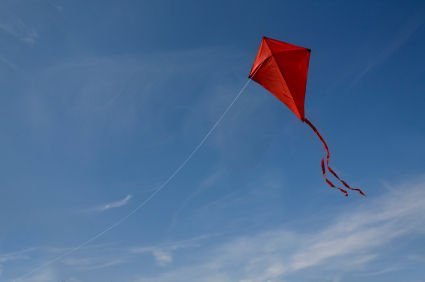
Running didn’t show me that I had a soul (I’d like to believe it was already there), it made me understand that what I needed to succeed in this life—what I needed to make healthy and loving choices, to be strong and confident and at peace—was already there inside me. Running helped me to tap into it and pull it out, unfold it and put its pieces together, like the kite you might get in your Easter basket, ultimately billowing high above the earth but tethered to you by a string.
And that’s what these volunteers want the girls to see. That they already have at least the pieces of everything they need to live a happy, healthy life right there inside them.
If they can get the girls to take just one step, to move forward just a little, the girls will learn to trust the voice they hear inside when they run. Eventually, the girls will run into themselves.
And maybe some of them will one day say, I am a runner.
Read Full Post | Make a Comment ( None so far )Anger Management, or how running could save the world
I’ve been feeling a bit out of sorts for a week or so. Not physically—I’ve been doing a lot of strength training, circuits, and swimming—but mentally. Emotionally. Spiritually. Whatever you want to call the blend of those other essences that make us who we are. Something simply hasn’t been right.
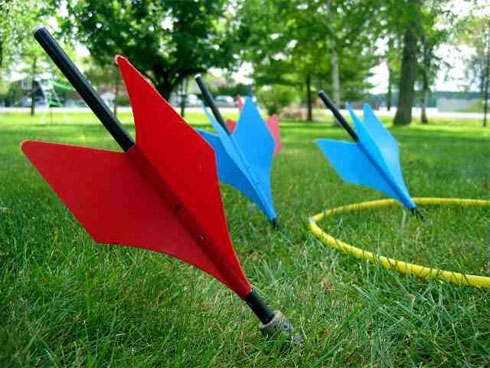
I don’t like it when something isn’t right and I can’t identify it. I feel it in my diaphragm, mostly, that space between the stomach and the heart, both of which are inevitably effected, like someone has been playing lawn darts in there and abandoned them where they stuck, and I’m left walking around dragging daggers behind me.
I’ve spent so much time in the gym these past two weeks that until this morning I haven’t been outside to run—just run and nothing more—for nearly 10 days. So yesterday, I set out from my house before dawn, alone. My favorite time and way to run. I always say that, always remember it, know it in my head, but I believe I actually forget the real reason why I love it until I’m out there running.
When I set out alone in the wee hours, I dragged the darts behind me. The heaviness made me angry. I didn’t realize this until I was about a mile and a half down the road, looked up from my reverie, and thought, how’d I get here already? I felt my legs moving fast and my body standing stiff and tall and I recognized that it was the quickness of anger that moved me.
But angry at what? is what I wanted to know. It’s been a good week—all seems right with the world, on the whole—and I couldn’t place the anger. So I kept running, letting my anger and the darts propel me down my path, until an amazing thing happened.
Somewhere between miles 2 ½ and 3, the darts fell away and my anger dissipated. Why? Because somehow, simply in the act of running, I found an answer. The issue that had twisted me all out of sorts had a name. Anger wasn’t the real issue, it was a symptom, and I could suddenly identify what it was that had been bothering me. I didn’t yet have a solution, but the issue finally had a name.
This, I was overjoyed to remember, not only in my head, but in every limb and organ in my body, is why I run. Alone. Before dawn.
There is nothing more therapeutic than pounding the pavement, letting whatever it is that ails you have the space to actually ail. By the end of my 5 mile run, I knew what the problem was and how to address it. What a relief.
And what a reminder. I need to run alone before dawn more often. Simply to keep clear and balanced.
Now, if we could get the whole world running, imagine what kind of problems could be solved.
Read Full Post | Make a Comment ( 2 so far )Flag Day Inspiration

Thursday, June 14, was Flag Day. I was privileged to attend the celebration of two people who became permanent U.S. residents, a mother and daughter from Haiti. I know B, the daughter, through Girls on the Run. I have seen her run. I have seen her cross the finish line in two races. For a long time, however, B could not run.
B came to America about 2½ years ago at the age of 9 after the devastating earthquake that shook Haiti to its core. She came alone, on a stretcher, to a country she did not know and one whose language she did not speak.
B and her mother, R, were close, and R did everything she could to give B a great life in Haiti. They both valued education. To this end, R ensured that B had the best teachers in Haiti, even though that meant that B’s school was too far away for her to walk to. However, if it had been close enough for most children to walk to, B could not have made it there. She had an illness that often left her debilitated and prevented her from walking.
R did everything she could to find treatment for B. They went to many doctors in Haiti, but the doctors could find no cure. They went to traditional healers, but B could not be healed. So they prayed, but B did not get better. They were baffled and frustrated as B continued to suffer.
When the earthquake struck, B was at her school, studying. The building collapsed, killing many, including B’s friends and teacher, and leaving B’s leg pinned under debris. Trapped for hours, she lay under the rubble and called for help.
In the middle of the earthquake, R’s thoughts were of her daughter. With tremors still shaking the island, R made her way to her daughter’s school, only to find it destroyed. Trusting that B was still alive, R dug in the rubble with her bare hands. B continued to call out for help until her mother found her. Soon, B’s uncle, and then the entire village, was there to uncover B.
When they dug her out, B’s leg was completely crushed by the weight of the building. Although she spent time in the hospital, a terrible infection set in. Doctors prepared to amputate B’s leg.
But what B didn’t know was what was happening over 1000 miles away. Her soon-to-be foster family—3 young girls and their parents—watched the crisis in Haiti unfold. Moved by the devastation, one of the girls spoke up first and asked if they could adopt one of the many injured children.
That was the first step in what would take a web of strangers—doctors, charities, and private citizens—to bring B to San Antonio. R was strong enough to choose hope for her daughter, and sent her off alone. B was courageous enough to leave. It would be an entire year before B could be joined by her mother.
Through the efforts of remarkable doctors, B’s leg was saved. She underwent a series of painful surgeries, without whining, without complaint. What’s more, her doctors diagnosed the disease that had limited B throughout her life. Fortunately, it’s one that can be successfully managed.
Finally, B is pain-free.
Almost two years after B arrived, I had the privilege of seeing her run. At the time, I didn’t know it was a privilege. At the time, I didn’t know her courage and her strength. I only saw a girl running.
I don’t think B knows that her bravery has fingers long enough to touch virtual strangers.
At the celebration, I chatted with a friend of the family. She said that when she told B what an inspiration she was, B said, “What’s an inspiration?” On Flag Day, in the Federal Building, surrounded by the web of people whose faith and love and hope crystallized into action, there were too many inspirations in the room to count.
Read Full Post | Make a Comment ( 1 so far )Next Entries »
 More Than Running...