Back in the Saddle
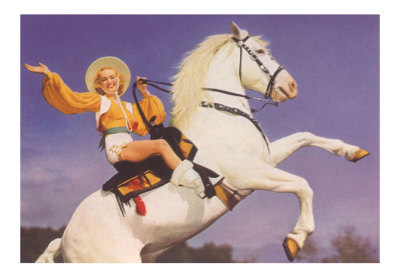
I’m back in the saddle again. And I’m not talking Gene Autry, I’m talking Aerosmith. It’s been a great week of running, biking, swimming, strength training. Oh yeah, and all the other stuff that seems to get in the way of training.
Guess I really did need a week off. I heard from several people after last week’s post who said that I probably needed to listen to my body, take time off, and give it the rest it needed.
Now, I know my body is a lot smarter than I am, and I know I should listen to it. I try to. But my mind always seems to get in the way. I sometimes picture my mind to be like Death in Family Guy, pointing its sickle at me every time I hit my snooze button or shut off the alarm and pull the covers over my head. Sometimes I wish it too would twist its ankle and get laid up for a week or two.
But I am my own worst enemy and my own worst critic. You see, my mind has a plan, a course of action I should follow. A vision of what will be. And so I set an expectation for myself, a standard I should meet, and then I work really hard to get there. But some days don’t allow for my plan. Some days I am reminded that there are forces larger than me that have a bigger (and better) plan in mind.
Not that I’m a control freak. I am generally very laid back. But when it comes to meeting my expectations of myself I am relentless. On the days my body tells me to shut off the alarm and go back to sleep, for instance, my mind wakes right up and starts a long conversation about dedication and work ethic. Which spirals into a monologue about character and integrity. Before I know it, I’m staring at the ceiling wide awake, feeling bad. Relentless.
So I am developing a new plan of action: learn to rest my mind along with my body. And, more important, when it comes to beating myself up, stay off my high horse. It’s more enjoyable in the saddle.
Read Full Post | Make a Comment ( None so far )A Girl on Track

I am blessed to be involved with a life-changing organization. Girls on the Run© is an empowerment program for girls in 3rd through 8th grade. Its purpose is to show girls that they don’t have to conform to the stereotypes society would impose upon them. They don’t have to give in to pressure—from family, their peers, society. They can choose to be themselves, they can choose to be strong.
They can choose.
You would think by the name that this is a running program. It’s not. Our mission has a much greater scope than to teach girls how to run. They’re kids. They already know how, even if they don’t yet know it, even if they choose not to.
But running, as runners know, is a great tool. Once you learn that you can do it—that you can reach what seem like impossible goals and that your body can do remarkable things—you learn that you can do anything.
You develop confidence. A healthy respect for your body.
I have been blessed to see this becoming (I sometimes don’t really know what else to call it) in many girls, and I have seen the struggle to become in many others. The becoming is beautiful. The struggle is agonizing. I have been watching it in one particular girl this season.
“Eloise” was one of mine 3 seasons ago, when I was her coach in Girls on Track, the program for 6th through 8th graders. You can see in her eyes that she has greatness in her. She is smart, creative, strong. And you can see in the twist of her lips and the tilt of her head the pull from her peers to be something she is not. Dumb. Aloof. Too cool to participate, especially when the boys hang around.
Her coaches this season tell me of the ongoing battle of wills between them and her. She skips the lessons, ignores the coaches, smirks defiantly. They tell her that they want her there but, as with most things, it is her choice to participate or not. Sometimes she chooses not.
But a curious girl, this Eloise. For all her defiance and playing at aloofness, for all her hiding out behind playground equipment and around corners, she keeps showing up. This is, in fact, her third season. And more than anything else she chooses to do or not do, she chooses to run.
Our season ends with a 5K race. The girls train for it during their 10 to 12 weeks of learning to be ok with themselves, and, we hope, learning that they are an important and irreplaceable piece in the puzzle of the world. Many of them do not believe when the season begins that they have it in them to run that far. All of them who come, finish.
In December, Eloise showed up to our 5K race. To get to the starting line, I recently discovered, she walked, alone, 2.42 miles, from her home. I know this, because when I found out, I mapped it.
Our spring season 5K is on Saturday, April 21. The battle of wills between Eloise and her coaches wages on. I think, however, that running will win, and Eloise will be there again. I believe that running gives her a glimmer of her potential. I’ve seen her face when she runs. All the tension disappears and is replaced with determination, joy.
I don’t know for sure if this is how she feels, but if she shows up, I will ask her. I want her to know, again, that she’s on the right track.
Read Full Post | Make a Comment ( 3 so far )Milestones
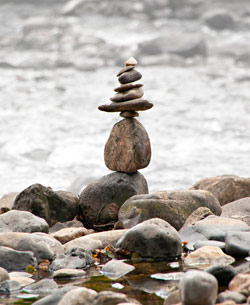
This week I hit two milestones:
1. I finally reached my sprint goal. (Yay!)
2. I officially registered for the June sprint tri.
I’ve been working toward my sprint goal for a good couple of months. I was so happy when I reached it this week that I almost pulled a George Jetson and flew backwards off the treadmill. Thank goodness for railings.
Not only was I ecstatic because I actually reached my goal, I was—and am—ecstatic because attaining my goal means I get to set a new one. A bigger one. A more challenging one.
Which is why I am doing the sprint tri. I’ve said that this will be my third tri. It will actually be my third and a half. I was so nervous the first time around that my friend and I entered as a two (wo)man team. The tri was called A Little Sand in Your Shoe, and it was on the beach in Guam.

I had to swim from Tumon Bay out to a sand bar and back, bury a ball in the sand, then run down the beach to tag my teammate. She had to ride her bike through the jungle (one participant got lost—I think I got the good end of the deal), run back down the beach, and dig up the ball I had buried.
Except that I was so caught up in the event that I didn’t mark the location of our ball well enough, and my teammate couldn’t find it. We came in 2nd place for the 2-man team anyway. It didn’t matter that there were only two teams. I was hooked.
As I was thinking about that race this week, I recalled the reason I entered it in the first place. It was a challenge. A fun way to see how far I could push myself, see what my body could do. Only I didn’t have enough confidence in myself to do it alone, and I was fortunate to have a friend in the same boat. Funny how often we end up hanging out with people who are so like us.
That got me to thinking about the reason I set out to do two sprint tris on my own. My motivation for them, as it turns out, was not so uplifting. Each of the two tris were like bookends containing a a heavy life load. The collapse of a marriage. Sickness. Death. I needed something to hold on to, something of my own. I needed to know that I could rely on myself—and I needed to preoccupy my mind and my time. At this point in life, I was figuring out how to do that without self-destructing.
Turns out that running—competing in tris and half marathons and other races—is good therapy. It shows you what you’re made of. It gives you confidence and peace. At least it does for me.
This time, my third full sprint tri, I am back to where I started in Tumon Bay—almost. I set this particular goal not to dull any pain or preoccupy my mind. I am blessed. Life is, after all, really good. I set this goal to challenge myself, and to have fun. But now I have the confidence to rely on my own abilities, whether I succeed or fail.
I may know who I am, but races always surprise me. I get to learn more about what I’m made of. And that’s a goal worth achieving.
Read Full Post | Make a Comment ( 3 so far )Sink or Swim

For as long as I can remember, I have been able to swim. I have no memory of not being near water, having grown up on a lake in Michigan and spending long summer days on or in the water until my lips turned blue and my fingers shriveled into prunes.
Even as an adult, I get to water as often as I can. I dive and snorkel and sail and most of the time would really rather be under water than just about anywhere else. It’s so much more peaceful.
So you’d think that I would look forward to the swim leg of the sprint tri I’m doing in June, especially since it’s in open water.
Not so.
Even though I learned how to swim at practically the same time I learned how to walk, apparently I didn’t learn right. Correct form? What’s that? I simply jumped in the water and off I went.
The closest thing to training I ever had was at age 12 in Girl Scout camp. Not freestyle, but sidestroke. Even now, the counselor’s words help keep my rhythm: Pick an apple, put it in the basket. Pick an apple, put it in the basket. If I could make a pie for every bushel of apples I’ve picked I could have opened my own bakery by now.
Freestyle, however, the stroke most conducive to tri competition, is the worm in my apple. I have watched countless swimmers glide gracefully through the water and have wondered how they can make it look so easy. When I try, I’m worn out before I finish a couple of laps. I feel like a wounded duck flailing around in the pool.
After two sprint triathlons and I won’t say how many years, it finally occurred to me that maybe I should take a lesson. I did recently figure out, after all, that it’s probably a good thing to ask for help when you need it.
So a few days ago, I took my first swim lesson. I spent most of the hour kicking myself. Why on earth hadn’t I done this before? In just one hour my stroke improved so tremendously that I was actually gliding through the water like a swan. And you know what? It was easy.
I came away from my lesson with a laundry list of things I was doing wrong. More important, I now know how to correct them. I can’t wait to get back in the water. I think I’ll be swimming once again until my lips turn blue and my fingers shrivel into plums.
Read Full Post | Make a Comment ( 4 so far )In Decision

If I could make up my mind the way housekeeping makes up hotel beds, I would be in pretty good shape. Perfectly tucked and creased. Lumps in all the right places.
Unfortunately, my decision-making ability isn’t always quite that smooth.
Well, that’s not entirely true. When it comes to deciding between, say, Tagalongs or Thin Mints, the decision is easy. Both. And therein lies my problem.
There’s a sprint tri coming up in June that I really want to enter. It will be my first tri in almost two years, and I know what I need to do to train for it. I’ve done it before. However, for me, training for a race means I need to eat clean, stop wining, and stick diligently to the training schedule hanging on my fridge.
I have what’s called a competing commitment. I am committed to entering this race (and, once I’m out there, to placing). And I am also committed to Tagalongs and merlot. I can’t have both.
Fortunately, our minds are remarkable things. This is fortunate, that is, once we understand how they work, especially in terms of decision-making. About 90% of our decisions are already made for us—by our subconscious mind. The beliefs we have about ourselves and the world are “programmed” in us when we’re young by our families, culture, education, geographic location, etc. Are these beliefs right or wrong? That depends. How are they serving you?
Take me, for instance. I grew up with the belief that I was shy and non-athletic. I believed I was made to read books, draw pictures, hang out alone. Most of my circumstances supported this belief and when I tried to participate in an activity contrary to it, I usually failed.
Fast forward 20 or so years. A little voice inside me tells me there are things I want do. Like teach and public speak. Swim and run and ride my bike really fast. But these things aren’t “me.” I can’t see myself doing them—until I change my mind.
Once I decide I can do these things, I start honoring that voice. I see me doing what I want to do, and I start doing it. If my subconscious can be programmed by others when I’m young, it can be reprogrammed by me when I’m old(er). I can retrain my mind to think about me in a different way.
I became a teacher. A public speaker (however big or small the audience). A runner, biker, swimmer. I changed the way I saw myself. I decided I could do it. And I did.
So why has it been so hard for me to commit to training for the June tri? Until this week, I hadn’t fully resolved to do it. My mind wasn’t all in. It was still drawn to the boxes of Girl Scout cookies hidden in my freezer behind a wall of frozen vegetables and chicken.
Now that I reached the first step, I can take the second. The first act of deciding is in the mind. The follow through is in the body. Both require action. I’m finally in.
Read Full Post | Make a Comment ( 9 so far )Ask and You Shall Receive
The other day I walked into a conversation that seemed to be about the adage “you have not because you ask not.” The gist of the conversation was this. Most of us don’t ask for help when we need it because we have all kinds of (wrong) ideas about what it means to need help. In refusing to ask for help, we not only hurt ourselves, but we also hurt our potential helpers.
Many things keep us from asking for help. Pride (I already know what the answer is). Fear (If they only knew, they would reject me). Our perceived inadequacies (If they find out I don’t know, they’ll think I’m a fraud). Inconvenience to others (I don’t want them to go out of their way just for me). We don’t want to be selfish, a taker.
Many of us were taught as kids that to ask for too much was simply too much. How many times did we hear an adult say stop pestering me or ask me again and you’ll get nothing? Socialization (family, education, geography, gender) taught us that we should be quietly content with what we have. Or that only brown noses, weaklings, etc. ask for help. The rest of us do it ourselves.
Did I mention that the ideas we have about asking for help are likely wrong? In addition to hurting ourselves when we don’t ask for help, we hurt others by depriving them of the opportunity to give. To help others is part of our basic humanity. It’s how we find common ground. It’s how we connect.
It took a couple of days for me to fully process this conversation. I thought of all the hundreds of times I have not asked for help when I needed it, and, as a result, all the harm I’ve caused myself. I thought too about all the times I’ve offered my help and been rejected, and how it gave me a bit of a hollow feeling inside, even if the offer was as simple as carrying a heavy load for a complete stranger.
Inevitably, I thought about running. How many times have I wondered why other runners train or eat a certain way. Where they learned a particular technique. How they do what they do. But I haven’t asked. Even when I’ve been in physical pain and their knowledge could have helped me.
Why? Since hearing this conversation, I can’t think of one good reason.
What do you do when you need help?
Read Full Post | Make a Comment ( 5 so far )Why Run?
It’s January, the first month of the year, the month when we post our resolutions smack dab on the front of the refrigerator, clear and bold and brazen for everyone to see. We resolve to eat right, exercise more, get our finances in order, spend more time with the people we love. We resolve to be kinder, gentler, more patient. And for some of us, the very first goal is one we really don’t need to post on our list because we’d do it anyway.
We resolve to run.
In 1990, there were approximately 4.8 million runners in the US; by 2010, there were almost 13 million. In just one short decade the number of runners nearly tripled. And that number accounts only for road race finishers, or those people who finished a 5K, 10K, half marathon, or marathon. It does not include your Average Joe or Joan who runs the neighborhood streets before dawn.
Running as a sport has exploded. Why do we run? According to Running USA’s latest survey (July 2011), most people run to stay in shape, stay healthy, have fun, and relieve stress. Additionally, many people take up running as a means of taking on a new challenge and achieving a new goal. Sometimes the goal is health-related, often it is not.
Although most people surveyed claim that the motivating factor to continue running is to stay in shape, just over 40% claim that they are not happy with the shape they are currently in. So they keep running, determined to attain the level of health they desire.
Running, however, does much more than get our bodies in shape. It gets our souls in shape as well. What I mean by soul is simply this: the soul is the essence of our being. It is who we are. There is something about running that allows us to tap into our essential humanity. We find our center, our core, that thing inside that makes us unique and connects us to the other souls out there too.
When we run we get to find out what we are made of. Can we make it up that hill? Can we reach the end of the road? Can we even begin? Often, what we are made of surprises us. We find that we have more power than we thought. We are strong, responsible, intentional. And the more we run, the farther we go, we also find that running opens us up. What we often find through this openness is optimism, gratitude, joy.
For most of us, running is not an end in itself. It is the means. It is the tool that helps to shape us. Like a carpenter’s adze, running makes intricate carvings in our character, refining us with each mile or minute we run. Even though it’s January, the first month of the year, we can resolve to run—but running itself can make us resolved.
Why do you run?
Read Full Post | Make a Comment ( 5 so far )Next Entries »
 More Than Running...