Flag Day Inspiration

Thursday, June 14, was Flag Day. I was privileged to attend the celebration of two people who became permanent U.S. residents, a mother and daughter from Haiti. I know B, the daughter, through Girls on the Run. I have seen her run. I have seen her cross the finish line in two races. For a long time, however, B could not run.
B came to America about 2½ years ago at the age of 9 after the devastating earthquake that shook Haiti to its core. She came alone, on a stretcher, to a country she did not know and one whose language she did not speak.
B and her mother, R, were close, and R did everything she could to give B a great life in Haiti. They both valued education. To this end, R ensured that B had the best teachers in Haiti, even though that meant that B’s school was too far away for her to walk to. However, if it had been close enough for most children to walk to, B could not have made it there. She had an illness that often left her debilitated and prevented her from walking.
R did everything she could to find treatment for B. They went to many doctors in Haiti, but the doctors could find no cure. They went to traditional healers, but B could not be healed. So they prayed, but B did not get better. They were baffled and frustrated as B continued to suffer.
When the earthquake struck, B was at her school, studying. The building collapsed, killing many, including B’s friends and teacher, and leaving B’s leg pinned under debris. Trapped for hours, she lay under the rubble and called for help.
In the middle of the earthquake, R’s thoughts were of her daughter. With tremors still shaking the island, R made her way to her daughter’s school, only to find it destroyed. Trusting that B was still alive, R dug in the rubble with her bare hands. B continued to call out for help until her mother found her. Soon, B’s uncle, and then the entire village, was there to uncover B.
When they dug her out, B’s leg was completely crushed by the weight of the building. Although she spent time in the hospital, a terrible infection set in. Doctors prepared to amputate B’s leg.
But what B didn’t know was what was happening over 1000 miles away. Her soon-to-be foster family—3 young girls and their parents—watched the crisis in Haiti unfold. Moved by the devastation, one of the girls spoke up first and asked if they could adopt one of the many injured children.
That was the first step in what would take a web of strangers—doctors, charities, and private citizens—to bring B to San Antonio. R was strong enough to choose hope for her daughter, and sent her off alone. B was courageous enough to leave. It would be an entire year before B could be joined by her mother.
Through the efforts of remarkable doctors, B’s leg was saved. She underwent a series of painful surgeries, without whining, without complaint. What’s more, her doctors diagnosed the disease that had limited B throughout her life. Fortunately, it’s one that can be successfully managed.
Finally, B is pain-free.
Almost two years after B arrived, I had the privilege of seeing her run. At the time, I didn’t know it was a privilege. At the time, I didn’t know her courage and her strength. I only saw a girl running.
I don’t think B knows that her bravery has fingers long enough to touch virtual strangers.
At the celebration, I chatted with a friend of the family. She said that when she told B what an inspiration she was, B said, “What’s an inspiration?” On Flag Day, in the Federal Building, surrounded by the web of people whose faith and love and hope crystallized into action, there were too many inspirations in the room to count.
Read Full Post | Make a Comment ( 1 so far )Diet Is a 4-Letter Word
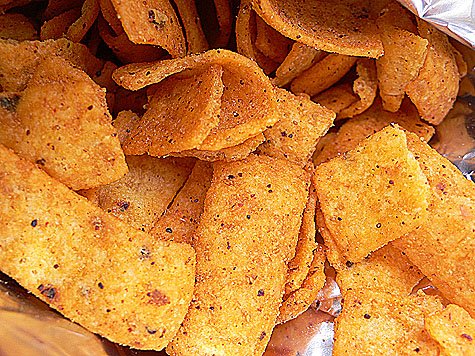
I had a run-in with my arch nemesis this week. Fritos. He won. What’s worse, he has a friend. Julio’s. If you’re from Texas, you’ve probably seen Julio there on the shelves between his rival corn chips, and if you’ve had him you understand his power of persuasion.
It seems I had a fiesta in my pantry this week. The timing figures—on the heels of my thoughts about garbage. Thankfully, the fiesta is over. Has it affected my training? Fortunately, no. My sprint tri is in two weeks (yay!), and my workouts have been going well. Has it affected the way I feel about myself? You bet. Disappointment is the first word that rolls to mind, like a thundercloud.
But the big question is this: Will my lapse in nutritional judgment this week cause me to change what I eat next week? That is, will I go on a diet? The big answer: Absolutely not. In my opinion, diet is a 4-letter word.
There are dozens of diets on the market, always have been, always will be. Each time a new study touts the superpowers of one kind of food or the evil powers of another, there’s bound to be a book, an infomercial, a talk show segment, or some other media blitz right on its heels. That’s not to say the studies aren’t important. They are. But information is only good when it’s used wisely.
A diet cannot last forever. A healthy lifestyle can. What’s the difference? A diet has a beginning and an end. Many diets require the dieter to eliminate entire food groups or to overindulge in others. They require an exorbitant amount of willpower, which always fails, partly because it is physiologically impossible and certainly unhealthy to eliminate or overindulge, and the dieter’s body will pressure her into balance—which means she eats what she “shouldn’t.” She gets frustrated and quits, or she meets her prescribed time limit and, inevitably, the diet ends.
Most diets also require the dieter to consume less calories than he expends. Makes sense, especially if weight loss is the goal. But often, the number of calories prescribed by the diet is far less than a body actually needs to function—which means the dieter loses energy, gets weak and lethargic. Cranky.
The body knows what it needs. It needs calories to pump the heart, run the brain and nervous system, move the muscles and the bones they’re attached to. If the body doesn’t get enough calories from all the food groups, it goes into starvation mode, slowing down metabolism to conserve energy—hoarding all that fat the dieter is trying to shed.
No diets for me, thank you. I prefer to live a healthy lifestyle. What this means to me is that there is no beginning and no end to proper nutrition. I eat all the food groups, every day. I don’t worry about what time I eat my last meal. My body doesn’t refuse carbs after 3:00. I don’t panic if Fritos wins for a couple of days.
Let me repeat that. Sometimes Fritos wins for a couple of days. But since I’m not on a diet, that’s ok. It’s my mind—my opinion of myself—that pays the bigger long-term price than my body. This is because I have chosen to live a healthy lifestyle rather than to be (forever) on a diet. I know what the effects of saturated fat are on my arteries when the Fritos win. That—and not the effect on the elastic in my pants—is why I’m disappointed in myself.
I do have some general rules of thumb I try to follow:
- If God didn’t make it, don’t put it in my mouth. This prompts me to eat more whole foods and far less processed foods. (Yes, I still try to argue with myself how God did, in fact, make Fritos since he made the people who invented, manufactured, packaged, shipped, and shelved Fritos, the corn that’s in the Fritos, the people who created and operated the machinery that made all the other gunk that’s in the Fritos. You see how it goes. It’s exhausting, really, this kind of logic. Still, sometimes I let it win…)
- Graze like a gazelle. If I eat small portions all day, I feel better. And who doesn’t want to eat all day? When I do, my metabolism runs fast and steady throughout the day. I have less of a desire to overindulge in anything because I’m always satisfied, never starving, and I don’t overeat to the point of discomfort. I know I’ll be eating again in just a few hours. It’s a beautiful arrangement.
- Don’t eat anything bigger than my head. Seems like a no-brainer when it comes to foods like watermelon. But this also means that if I choose to have pizza, I can’t actually eat the whole thing. I would. But I can’t.
These rules of thumb have come after years of learning to listen to my body when it tells me what it needs. They’ve come because I do read the reports about nutrition and exercise. They’ve come because my main goal for my body is disease prevention. If I focus on keeping my body healthy and disease-free, I gravitate to the foods that will do that and steer away from the foods that won’t. In the process, my weight corrects itself. My tastesbuds have more than adapted to whole foods—I actually look forward to them. And I have more energy, more clarity of mind, and feel better than I have in my life.
What are your thoughts about diets?
Read Full Post | Make a Comment ( 7 so far )Garbage in, Garbage out
I love food. Always have. I love to eat it, cook it, smell it, look at it, think about it, and talk about it. Sometimes I even dream about it. But I can’t tell you how many food conversations I’ve had during which one of the participants holds up a hand dismissively and says, “Well, you’re a runner. You can eat anything.”
That sentiment, I’m afraid, I do not love.
Many people take up running because they want to drop a few pounds. They know they need to get some cardio work into their routines—or they need to start a routine—and running seems like a fit. Some lose weight, some do not. The difference? It’s not only the output. More than likely, it’s the input.
I took up running for a much different reason than weight loss. A nice by-product has been that I keep my weight in check. I don’t do this by eating “anything.” I do, however, eat what I want. And lots of it.
A funny thing has happened over the past several years. My wants have changed. I used to be the queen of canned ravioli and packaged macaroni and cheese. Now, you couldn’t hold me down and force feed me either.
Sometimes I think I crave, say, macaroni and cheese, and sometimes I even talk about it for days on end. What I crave is not the food itself, but what the food represents. I now know enough about my body to know that if I did break down and eat macaroni and cheese, 1) I would be immensely disappointed in the taste, and 2) I would feel sick for at least a day, probably more.
The more I’ve run (and biked and swam), the more efficient my body has become at metabolizing food—if it’s the right kind of food. For me, that includes oatmeal, fruit, sweet potatoes, kale, and just about any other vegetable I can get my mouth on. It’s not cake and crackers and pizza. Even if I think I want it to be.
When I eat “anything,” I cannot run. That is, my sleep patterns are interrupted and I feel lethargic the next day. I feel like I’m running with a boulder in my belly, and my legs feel like lead. Those factors do not make for an enjoyable run, at least not for me. And for the rest of the day, I’m not the most pleasant person to be around.
That doesn’t mean that I never eat “anything.” Sometimes I choose pizza or bananas foster over running. But I recognize in the moment that it is, in fact, a choice, the consequences of which I will have to live with the next morning.
You’ve heard people say that our bodies are like machines and need the proper fuel to keep them operating the way they’re intended to. I’m not going to say exactly that, because I believe our bodies are so much more than machines. But there’s something to it. Garbage in, garbage out. Just like our computers. Our eyes. Our thoughts. Our bodies are no different.
So you’re a runner but some mornings a sharp stick in the eye seems like it might feel better than even your 2 mile route? Take a hard look at what you’re eating. Are you serving what you want—and is what you want serving you?
Read Full Post | Make a Comment ( 7 so far )At the Core of the IT Band
I remember the first time I saw the Ice Capades. This was in Dorothy Hamill’s day, and she was my idol. I wanted to be a princess on ice, just like her, twirling and gliding, hair bobbing in the breeze. I even had her haircut. She was my star.
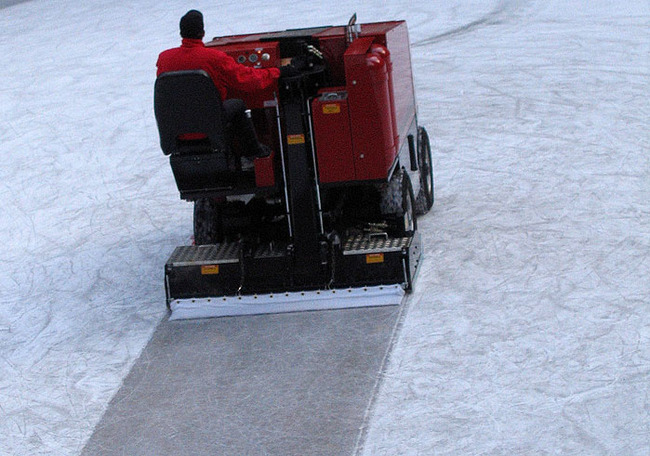
Until intermission. Which was also the first time I saw a Zamboni.
While my brothers and sisters flocked to the snack stand to load up on cotton candy and Cokes, I sat mesmerized watching what appeared to be magic—a giant bulldozer-like machine gliding over the ice, smoothing over the cuts and scrapes left behind by sharp blades. It was a thing of beauty, and suddenly my highest ambition in life was not to be a figure skater but to drive the Zamboni.
Making order out of chaos. What greater serenity could there be? I have since found the same satisfaction I experienced watching the Zamboni in ironing and mowing the lawn. There is something supremely peaceful in smoothing over creases, evening out irregularity. Finding balance, perhaps. Symmetry.
So you’d think I would find the same satisfaction in my foam roller as it smooths over the bubble-wrap tendon that has become my IT band. Alas. It is not so.
My IT band tightens pretty regularly, throwing off my body mechanics when I run. It took me nearly 6 months of incredible marathon-training-stopping pain to figure out what my IT band actually does. I experienced hip pain so devastating that for a while I could barely walk. (Did this keep me from limping out to the road every morning anyway to see if I could run? Of course not. Someone smack me in the head.) All the research I did on running injuries related the IT band to knee pain, not hip pain, so I couldn’t figure out what was wrong.
I finally saw a doctor, who referred me to a physical therapist (the best, I might add, in San Antonio). She solved the problem. Sure, my IT band was a mess, she concluded, but that would be relatively easy to straighten out. Simply foam roll regularly and see a massage therapist as often as I could stand it. Easy enough. I bought a foam roller and started massage therapy (lucky for me I found the best massage therapist, I would also add, in San Antonio).
However, the crux of the problem, my physical therapist pointed out, is not my IT band. My IT band transforming into bubble wrap is the symptom, not the cause. The real problem is at the core. Literally.
A strong core is the basis of all good form, no matter what sport you participate in, including running. Most runners I know, particularly women, seem to think that all they have to do is run to keep up the muscles that help them run. In reality, you need strength training to help with speed and endurance. But even strength training alone—if it doesn’t include core work—won’t get you very far.
My ongoing task has been to strengthen my stabilizers. It’s one I haven’t been very diligent about maintaining. I seem to go at it in bits and spurts, a few weeks on, a few weeks off. What reminds me to get back to core strengthening is both my foam roller and my massage therapist. When a date with either of them forces words from my mouth that would make my mother blush, I know I’ve been neglecting my core.
What kinds of core exercises do you do to maintain stability?
Read Full Post | Make a Comment ( 7 so far )The Art of Swimming, or how Ben Franklin helps me train
Any time I think of Ben Franklin—and yes, oddly, I think of him a lot—it’s never as a swimmer. Yet there I was in the pool this week working on my stroke when who should I think of but Franklin.
Franklin has been one of my heroes, I suppose you could say, since I first read his Autobiography in high school. (I know. I was an odd kid.) What appealed to me about Franklin then appealed to me throughout college and well into now. Franklin was all about self-improvement. He was a planner, a list-maker, an organizer of days and details, who believed that hard work, patience, and discipline lead to progress.
He went so far as to devise a character development project—The Art of Virtue—in the hope of attaining “moral perfection.” To this end, he listed 13 virtues or qualities of character he felt most important, with an explanation or precept beneath each one. He made a chart listing the 13 virtues down the side and the 7 days of the week across the top. Each week, he focused on one virtue.
He carried his chart with him everywhere he went, and each time he failed to live up to that week’s precept, he’d make a mark on the chart. The fewer the marks on the chart, the closer he came to meeting his idea of moral perfection. The next week, he’d focus on the next virtue, and then the next, until he worked his way through all 13. Then he’d start over again.
He kept his chart for 50 years. He never quite reached moral perfection (I highly doubt he ever thought he would), but he became a better man by marking himself through life.
So why was I thinking about moral perfection while swimming this week? I wasn’t. I was thinking about my elbows. Was I lifting them high enough out of the water? Were they coming up in the shape of a pyramid? Or maybe a chicken wing wrapped tightly to the body strapped on a rotisserie, turning maybe 75°, but not quite all the way around, just enough to twist my body up and around to take a deep breath of air? (I know. I am an odd adult too. Sometimes I get hungry while I swim. Usually, I think of oranges. This time, it was rotisserie chicken.)
My elbows. That was my focus, just for this week. Last week it was my kick. Next week it will be something else. Each time I get in the pool I try to practice proper form, but I realized this week that I focus on only one thing. Enter Franklin.
I won’t go so far as to make a list of 13 swimming components I need to improve, but I have one in my mind. In all other endeavors I have undertaken that involve self-improvement, I have made a plan—created a list, kept a calendar, somehow marked my progress and lack thereof. I have done this, in part, to keep from being overwhelmed. A project is always easier to undertake if I break it down into smaller parts.
Triathlon training is easier to undertake if I break it down into smaller parts.
I don’t have to master the art of swimming in just one week. Not even in one month. There are too many components to take into account, at least for me. But if I focus on just one thing at a time—just one week at a time—I will at least get better. And all I ask for is improvement.
So thank you, Ben, for once again reminding me that improvement comes in small measures, over the course of time.
I said that before this week, I had never thought about Franklin as a swimmer. Heck, I never thought of him as athletic at all. Come to find out, he not only taught himself how to swim in a time when almost no one went swimming, but he invented fins. He is, in fact, the only founding father to be in the Swimming Hall of Fame. I wonder what his training log looked like.
Read Full Post | Make a Comment ( 2 so far )In Medias Res
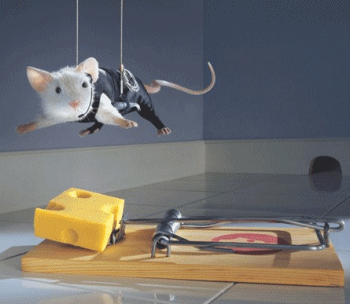
This post is longer than usual for me, in large part because it’s a complicated subject for me. I suspect it is for others too. Goals. Not goal setting, which many of us do, but goal revising, which many of us stop short of doing and choose instead to call our missed goals failures.
I have set my share of goals, most of them fitness-related, especially in the past decade. (Note: When you start talking about your life in terms of decades, you know you’re getting old.) Sure, I have set work-related goals. For the most part, they’ve been called deadlines. To my way of thinking, that’s not quite the same thing as setting goals.
Many people use New Year’s resolutions as their goal-setting strategy. But the idea of making resolutions has always bugged me—why pressure myself to set goals during this monumental goal-setting time once a year? And if January passed and I hadn’t resolved to do much of anything, I was off the hook for another year, drifting about on the Nonplan Plan, which is what I did for a year or two. Maybe three. Which is, perhaps, why New Year’s resolutions bugged me.
I know a bit about goal setting and time management. I’ve taught the principles and the actions and I know what I’m supposed to do: Set big (challenging), specific, measurable goals with realistic deadlines, long and short. Write them down. Read them regularly. But other than fitness-related training goals with the requisite plan tacked on my refrigerator, I hadn’t written down any goals. Instead, I kept them in my head. Picked a vague date. Figured I’d make it. Or not.
So this past January, I tried something new. I made two lists, one of priorities and the other of short- and long-term goals, and taped them to my bathroom mirror. They were the first thing I saw every morning and the last thing I saw every night. And since I work from home, I saw them a number of times in between.
I listed my priorities first. My goals wouldn’t mean much unless I knew what larger picture I was trying to paint. Additionally, no matter what I have planned on any given day or week, life happens. The time or effort I have to put toward my goals often conflict, and I have to choose. Reminding myself of my priorities makes it easier to know what choice to make. At least in theory.
My priorities, listed in order of importance, looked like this:
- God
- Health
- Relationships
- Writing
- Work
My logic went something like this: Life is not about me, it’s about serving others (God). In order to serve others to the best of my ability, I need to take care of myself (Health). The things in life that mean the most to me—the things I serve—are not things, they’re people (Relationships). The abilities, skills, and passions I have to serve others with are gifts, and gifts are meant to be opened, not kept under wraps. I am blessed with the gift of writing—what can I do with my writing to help others see (Writing)? I am blessed with the ability to run—how can I extend my life-altering passion to others (Work)?
Under each priority, I jotted down a few phrases about what the priority means to me. Under God, for example, one of the things I wrote is to keep my light on a table, not under a bushel. Under Health I wrote only one thing: You know what to do. Just do it. (Clearly, I have set the most goals in my life around this priority.)
Next, I wrote out some goals: 8 for the month of January—specifically under the priorities I knew I would struggle with most; five 3-month goals (end of March); three 6-month goals (end of June); and two one-year goals (end of December). I intentionally set fewer long-term goals, as I knew that 6 and 12 months were too far out to set very specific goals, and I would need to revise accordingly.
Revise accordingly. This is where I am now.
I achieved 7 of my 8 January goals. By the end of March, I achieved only 2 of 5. I am on track to achieve maybe 1 of my 3 June goals and maybe 1 of my 2 December goals. I took the papers off my mirror at the end of April. Not because I failed. But because I choose to succeed.
I fail now only if I choose to do nothing. I succeed if I revise.
Revision, as it turns out, can be pretty tricky. It’s a lot like what Ernest Hemingway said about writing: “There is nothing to writing. All you do is sit down at a typewriter and bleed.”
Revision means not only reevaluating your goals, but why you set those goals in the first place. The goals that I haven’t met, for instance, can be lumped into two categories: those that depend on others to achieve and those that have to do with writing. Once I can see a pattern emerge—two categories—I can figure out how to revise.
Goals that depend on others to achieve, as it turns out, are not really goals. At least not my own personal goals. Unless I checked with those “others” to see if their goals align with mine. If I haven’t, then I’ve set unrealistic and probably immeasurable goals. Every single goal I missed in this category has to do with work.
I feel so passionate about the mission of my organization and I see very clearly in my mind where I believe we need to head. My vision, however, doesn’t match my past few months’ experience. Does this mean that I should ditch the organization and our goals because we’re not where I wanted to be?
Hardly. Rather, I can use life experience to reshape not only our goals, but my goals. I can learn what to measure, understand what’s realistic, and check with others first. Then I can set new goals, making sure to set goals that are “mine,” not “ours.” There is most certainly a place for “our” goals, but that place is not necessarily on my bathroom mirror.
The other category of goals I didn’t meet has to do with writing, which is pretty high on my list of priorities. It’s the first of things I “do” after things I “am.” In other words, it’s action rather than character. Sort of. Because I am, and have always been, a writer, whether I have been a paid writer (sometimes) or not (most of the time). Writing, writers know, is part of one’s essence.
If a priority is that high on my list and I fail to meet most of the goals associated with it, then, as painful as it might be to even suggest it, maybe my priority is not really a priority. My boyfriend reminded me of this indirectly just the other day. I can’t very well get my book published if I’m not sending it out to agents. And I can’t get a novel published if I haven’t yet finished writing it.
So why haven’t I been doing the things I know I need to do—that I really want to do? In part, it’s because of competing commitments and accountability. If there are X hours in a day and I have set aside a block of them to write but a work issue arises that needs to be addressed immediately, there goes writing time. Two goals—two priorities—competing for the same block of time. Which one wins?
Technically, it should be the higher priority on my list. In this case, writing. Practically, what wins is the priority that serves the most people, most immediately: Work. At work, I am accountable to over 100 girls, 30 coaches, 5 sites, and whoever reaches out for information. In writing, I am accountable to only me.
And it’s this thing called accountability that often causes the bleeding and makes us feel as if we’ve failed when the deadline for a goal has passed with the goal unattained. We are, in the end, always accountable to ourselves. Goals are, after all, ours. We set them.
Who says we can’t revise them?
Revision is part of progress. How do I know where I’m going if I don’t know where I am or where I’ve been? I need to set my goals. Measure and monitor them. And when life happens, as it inevitably does—and thank God it does—revise accordingly.
I wish I could say I have done this already and that I have solved my dilemma of competing commitments. But I have not. I am in medias res, and in the middle of things is not such a bad place to be. I will figure it out. And if I’m wrong, I’ll revise.
Read Full Post | Make a Comment ( None so far )Motivation Vacation

This week has been tough. I think my motivation took a vacation and I’ve been finding it hard to get out of bed each morning to run. It seems that the momentum leading into our race last week, plus some unexpected stress (an oxymoron, I think) took its toll on my self-discipline. Such is life.
To insure that I don’t have another week like this one, I’ve had to remind myself of some of the reasons I really do enjoy getting my butt out of bed and onto the pavement or in to the gym:
- Stars. I love to run before dawn and stare at the stars. They have been more visible in some places I’ve lived than others, but no matter where I am I inevitably run with my face up. An added bonus in the summer is fireflies, which are like fallen stars.
- Peace. Another reason I love to run before dawn. Few cars. Occasional fellow runners. The time and space to get my head together.
- More food, less guilt. Not that I’ve ever missed a meal. Trust me. I am blessed with a high metabolism (for which my sister hates me) so I eat a lot anyway. But if I can get a pizza in guilt free, then what the hay?
- Bathing suit season. Need I say more?
- I have triceps? By gum, I do! I found them just recently hidden somewhere under a layer of skin. I would hate to lose them again. It was a long, bloody battle to find them in the first place.
Only five reasons, one for each week day, but there are many more. On weekends I bike, which means I get to go downhill really fast. That’s always worth getting up for.
I’d love to hear from the rest of you. What keeps you motivated when life wants to crash your training party?
Read Full Post | Make a Comment ( 6 so far )A Girl on Track

I am blessed to be involved with a life-changing organization. Girls on the Run© is an empowerment program for girls in 3rd through 8th grade. Its purpose is to show girls that they don’t have to conform to the stereotypes society would impose upon them. They don’t have to give in to pressure—from family, their peers, society. They can choose to be themselves, they can choose to be strong.
They can choose.
You would think by the name that this is a running program. It’s not. Our mission has a much greater scope than to teach girls how to run. They’re kids. They already know how, even if they don’t yet know it, even if they choose not to.
But running, as runners know, is a great tool. Once you learn that you can do it—that you can reach what seem like impossible goals and that your body can do remarkable things—you learn that you can do anything.
You develop confidence. A healthy respect for your body.
I have been blessed to see this becoming (I sometimes don’t really know what else to call it) in many girls, and I have seen the struggle to become in many others. The becoming is beautiful. The struggle is agonizing. I have been watching it in one particular girl this season.
“Eloise” was one of mine 3 seasons ago, when I was her coach in Girls on Track, the program for 6th through 8th graders. You can see in her eyes that she has greatness in her. She is smart, creative, strong. And you can see in the twist of her lips and the tilt of her head the pull from her peers to be something she is not. Dumb. Aloof. Too cool to participate, especially when the boys hang around.
Her coaches this season tell me of the ongoing battle of wills between them and her. She skips the lessons, ignores the coaches, smirks defiantly. They tell her that they want her there but, as with most things, it is her choice to participate or not. Sometimes she chooses not.
But a curious girl, this Eloise. For all her defiance and playing at aloofness, for all her hiding out behind playground equipment and around corners, she keeps showing up. This is, in fact, her third season. And more than anything else she chooses to do or not do, she chooses to run.
Our season ends with a 5K race. The girls train for it during their 10 to 12 weeks of learning to be ok with themselves, and, we hope, learning that they are an important and irreplaceable piece in the puzzle of the world. Many of them do not believe when the season begins that they have it in them to run that far. All of them who come, finish.
In December, Eloise showed up to our 5K race. To get to the starting line, I recently discovered, she walked, alone, 2.42 miles, from her home. I know this, because when I found out, I mapped it.
Our spring season 5K is on Saturday, April 21. The battle of wills between Eloise and her coaches wages on. I think, however, that running will win, and Eloise will be there again. I believe that running gives her a glimmer of her potential. I’ve seen her face when she runs. All the tension disappears and is replaced with determination, joy.
I don’t know for sure if this is how she feels, but if she shows up, I will ask her. I want her to know, again, that she’s on the right track.
Read Full Post | Make a Comment ( 3 so far )Milestones
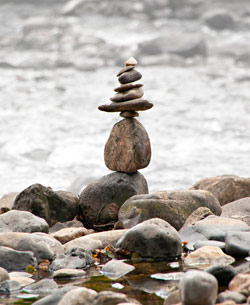
This week I hit two milestones:
1. I finally reached my sprint goal. (Yay!)
2. I officially registered for the June sprint tri.
I’ve been working toward my sprint goal for a good couple of months. I was so happy when I reached it this week that I almost pulled a George Jetson and flew backwards off the treadmill. Thank goodness for railings.
Not only was I ecstatic because I actually reached my goal, I was—and am—ecstatic because attaining my goal means I get to set a new one. A bigger one. A more challenging one.
Which is why I am doing the sprint tri. I’ve said that this will be my third tri. It will actually be my third and a half. I was so nervous the first time around that my friend and I entered as a two (wo)man team. The tri was called A Little Sand in Your Shoe, and it was on the beach in Guam.

I had to swim from Tumon Bay out to a sand bar and back, bury a ball in the sand, then run down the beach to tag my teammate. She had to ride her bike through the jungle (one participant got lost—I think I got the good end of the deal), run back down the beach, and dig up the ball I had buried.
Except that I was so caught up in the event that I didn’t mark the location of our ball well enough, and my teammate couldn’t find it. We came in 2nd place for the 2-man team anyway. It didn’t matter that there were only two teams. I was hooked.
As I was thinking about that race this week, I recalled the reason I entered it in the first place. It was a challenge. A fun way to see how far I could push myself, see what my body could do. Only I didn’t have enough confidence in myself to do it alone, and I was fortunate to have a friend in the same boat. Funny how often we end up hanging out with people who are so like us.
That got me to thinking about the reason I set out to do two sprint tris on my own. My motivation for them, as it turns out, was not so uplifting. Each of the two tris were like bookends containing a a heavy life load. The collapse of a marriage. Sickness. Death. I needed something to hold on to, something of my own. I needed to know that I could rely on myself—and I needed to preoccupy my mind and my time. At this point in life, I was figuring out how to do that without self-destructing.
Turns out that running—competing in tris and half marathons and other races—is good therapy. It shows you what you’re made of. It gives you confidence and peace. At least it does for me.
This time, my third full sprint tri, I am back to where I started in Tumon Bay—almost. I set this particular goal not to dull any pain or preoccupy my mind. I am blessed. Life is, after all, really good. I set this goal to challenge myself, and to have fun. But now I have the confidence to rely on my own abilities, whether I succeed or fail.
I may know who I am, but races always surprise me. I get to learn more about what I’m made of. And that’s a goal worth achieving.
Read Full Post | Make a Comment ( 3 so far )Sink or Swim

For as long as I can remember, I have been able to swim. I have no memory of not being near water, having grown up on a lake in Michigan and spending long summer days on or in the water until my lips turned blue and my fingers shriveled into prunes.
Even as an adult, I get to water as often as I can. I dive and snorkel and sail and most of the time would really rather be under water than just about anywhere else. It’s so much more peaceful.
So you’d think that I would look forward to the swim leg of the sprint tri I’m doing in June, especially since it’s in open water.
Not so.
Even though I learned how to swim at practically the same time I learned how to walk, apparently I didn’t learn right. Correct form? What’s that? I simply jumped in the water and off I went.
The closest thing to training I ever had was at age 12 in Girl Scout camp. Not freestyle, but sidestroke. Even now, the counselor’s words help keep my rhythm: Pick an apple, put it in the basket. Pick an apple, put it in the basket. If I could make a pie for every bushel of apples I’ve picked I could have opened my own bakery by now.
Freestyle, however, the stroke most conducive to tri competition, is the worm in my apple. I have watched countless swimmers glide gracefully through the water and have wondered how they can make it look so easy. When I try, I’m worn out before I finish a couple of laps. I feel like a wounded duck flailing around in the pool.
After two sprint triathlons and I won’t say how many years, it finally occurred to me that maybe I should take a lesson. I did recently figure out, after all, that it’s probably a good thing to ask for help when you need it.
So a few days ago, I took my first swim lesson. I spent most of the hour kicking myself. Why on earth hadn’t I done this before? In just one hour my stroke improved so tremendously that I was actually gliding through the water like a swan. And you know what? It was easy.
I came away from my lesson with a laundry list of things I was doing wrong. More important, I now know how to correct them. I can’t wait to get back in the water. I think I’ll be swimming once again until my lips turn blue and my fingers shrivel into plums.
Read Full Post | Make a Comment ( 4 so far )« Previous Entries Next Entries »
 More Than Running...